
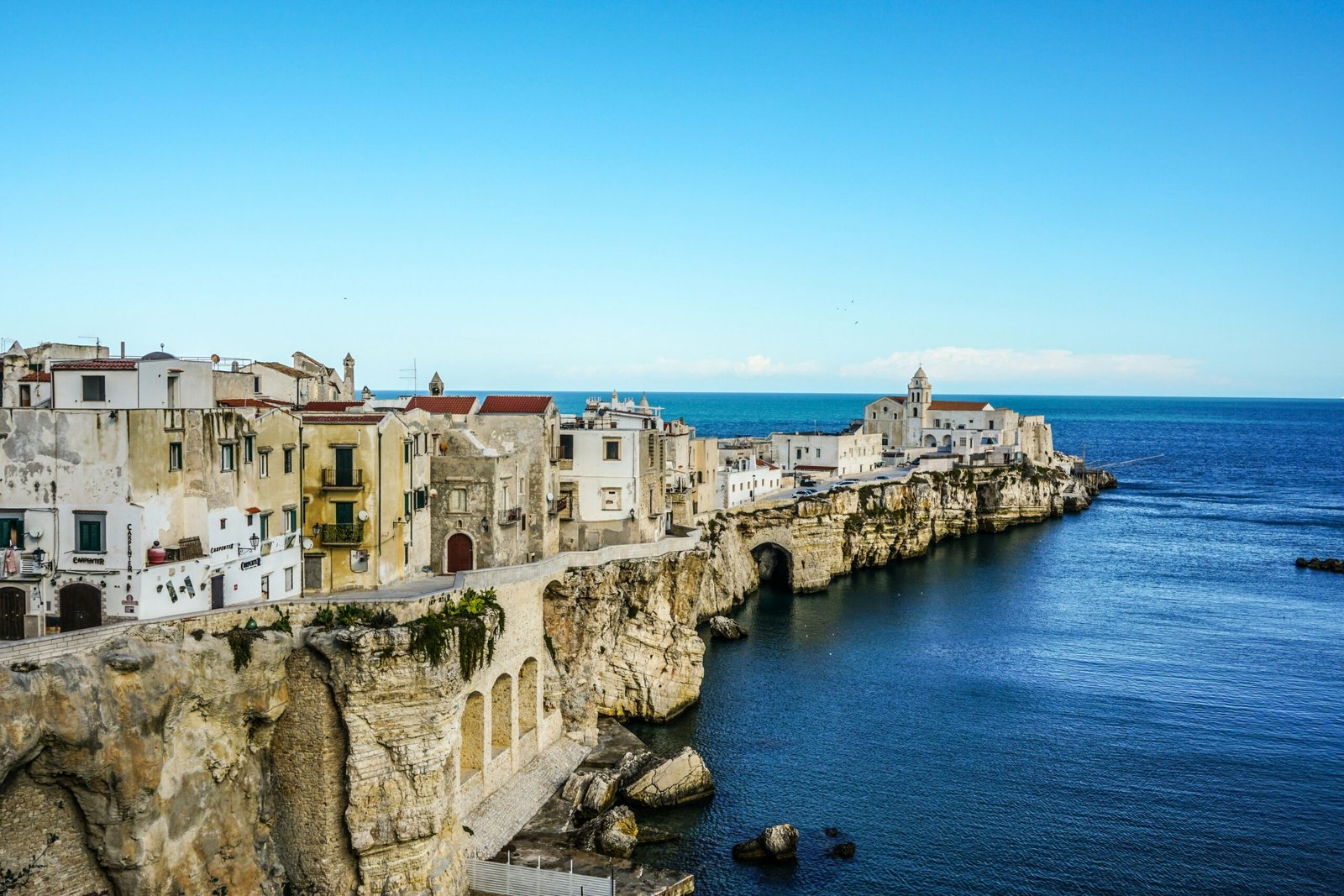
GlobeVision™ — How to structure Puglia by zones, bases and real transport logic
📊 GlobeVision™ Strategic Index
🧭 Operational summary of Puglia
📊 GlobeVision™ Indicators
High
High
Medium
Medium
🌍 Quick destination keys
Puglia
Italy
Region
In large destinations, the real mistake is usually not what to visit, but trying to connect zones that do not belong in the same day.
Introduction
Main destination: Puglia, Italy.
This guide is designed to help you organize a trip through Puglia with a practical focus: choosing bases, transport, zones, season, accommodation, frequent mistakes and logistical planning.
Single key decision: choose the right subregion and transport strategy in Puglia to reduce transfers and avoid unnecessary hotel changes. The critical variables are number of days, season, willingness to drive and your main goals: whitewashed towns, beaches, coastline, trulli, food or nature. Puglia does not work like a large city that can be “covered” from one central point without consequences; it works like a long region, with distant nodes and roads that look simple on the map but consume real time once you add historic centers, parking, ZTL zones and high-season beaches.
The smart way to approach it is to choose the territorial block first, then the base, and only then the visits. If you reverse the order — listing places, booking hotels and then trying to connect everything — you end up with accommodation changes, duplicated routes and overloaded days. For a first trip, the goal should not be “to see all of Puglia”, but to prevent Puglia from forcing you to drive more than you actually enjoy.
Quick decision: which area of Puglia to choose by travel style
| Travel profile | Recommended area | Practical base | Key decision |
|---|---|---|---|
| 3–4 days, first time | Valle d’Itria + central coast | Monopoli or Polignano | One base only, without Gargano or deep Salento |
| 5–7 days with a car | Valle d’Itria + Salento | Monopoli/Locorotondo + Lecce/Gallipoli | One single hotel change halfway through the route |
| Trip without a car | Bari–Polignano–Monopoli–Lecce rail line | Monopoli and Lecce | Give up remote coves and Gargano |
| Summer beach trip | Salento | Gallipoli, Otranto or Lecce | Book lidos and choose the coast according to wind |
| Nature and wild coastline | Gargano | Vieste or Peschici | Minimum 3 consecutive nights, without mixing it with Salento |
🎟️ Book strategically before arriving
In Puglia, it makes sense to book in advance the experiences that condition your schedule: Alberobello and Valle d’Itria tours, Matera day trips from Bari, boat tours in Gargano and activities in Lecce. Booking is not just about convenience: it prevents you from losing light windows, parking time and half a day to improvised decisions.
📊 Practical data for Puglia

Destination mental map

Puglia works as a vertical axis with three main blocks. In the north, Gargano is a mountainous spur with slow roads, coves and the Umbra Forest; Foggia is the gateway, while Vieste and Peschici concentrate the practical bases. In the center, Valle d’Itria brings together whitewashed towns, hills and short distances; Polignano, Monopoli, Locorotondo and Martina Franca structure the network. In the south, Salento is a peninsula with two complementary coasts, Adriatic and Ionian; Lecce is the urban node, while Otranto and Gallipoli serve beach-focused itineraries. Bari–Lecce is roughly 150 km, and Bari–Vieste is close to 190 km, but real travel times rise sharply once you add ZTL zones, parking, secondary roads and beach access.
Useful distances to avoid overplanning: Polignano–Alberobello 35 minutes, Monopoli–Ostuni 45 minutes, Lecce–Otranto 45 minutes, Lecce–Gallipoli 40 minutes, Bari–Matera 1 h 15 min, Foggia–Vieste around 2 h on winding roads. In summer, add 25–40% for traffic and parking searches in towns and beach areas. In Valle d’Itria, optimal daily radii are 20–40 km; in Salento, think in two coastal half-moons and do not cross from one coast to the other every day; in Gargano, avoid agendas with more than two movements in a day. This mental map prevents ambitions that break the trip.
Operational areas of Puglia: what to expect from each block
| Area | Best for | Logical base | Risk if planned badly |
|---|---|---|---|
| Gargano | Wild coast, boat trips, caves, nature | Vieste or Peschici | Slow roads and exhausting days if mixed with Salento |
| Valle d’Itria | Whitewashed towns, trulli, compact routes | Monopoli, Locorotondo, Martina Franca | Too many towns in one day and saturated parking |
| Central coast | Polignano, Monopoli, Ostuni, short excursions | Monopoli or Polignano | ZTL, midday photos and restaurants without reservation |
| Salento | Beaches, Lecce, Otranto, Gallipoli | Lecce, Gallipoli or Otranto | Crossing coasts every day and depending too much on wind |
How to get there

Main air gateways: Bari/BRI and Brindisi/BDS. Choose Bari if your focus is Valle d’Itria, the central coast, Matera or Gargano; choose Brindisi if your focus is Salento, Lecce, Otranto or Gallipoli. Frecce trains connect Rome–Bari in around 4 h and Naples–Bari in around 3 h; regional trains from Bari to Lecce usually take about 1 h 45 min. If you are not driving, combine train travel to Bari, Monopoli, Polignano or Lecce with local buses; for Gargano, the most sensible entry point is Foggia, then continuing toward Vieste or Peschici.
Renting a car pays off strongly in Valle d’Itria and Gargano; in Salento it is useful if you want coves, lidos and beaches outside the main towns. Avoid picking up a car inside historic centers: airport or peripheral station pickups are safer. In summer, do not calculate only kilometers; calculate parking searches, heat, meal schedules and the driver’s real tolerance. In Puglia, a 45-minute route can turn into 1 h 20 min if you arrive late to a town, search for parking and cross narrow streets.
Transport costs and decisions in Puglia
| Option | Approximate cost | When it makes sense | Practical risk |
|---|---|---|---|
| Regional train | €4 – €12 for typical routes | Bari, Polignano, Monopoli, Brindisi, Lecce | Lower frequencies on Sundays and weak rural connections |
| Local bus | €2 – €8 depending on route | Specific connections to towns or beaches | Seasonal schedules, waits and limited flexibility |
| Rental car | Variable by season and insurance | Valle d’Itria, Gargano, Salento coves | ZTL, parking, night roads and rental excesses |
| Taxi / short transfer | €36 – €72 for about 5 km in tourist zones | Late arrivals, luggage or fixed short transfers | High cost if used as a daily solution |
| Organized excursion | Variable by activity | Matera, Alberobello, Valle d’Itria, Gargano boats | Less freedom, but fewer parking and timing mistakes |
🧭 When an organized excursion is worth it
If you travel without a car or do not want to deal with ZTL zones and parking, an organized visit to Alberobello, Valle d’Itria or Matera can be more efficient than improvising connections. It is especially useful on 3–5 day trips, when losing 90 minutes to parking can break the day.
Where to stay

Valle d’Itria: bases with simple logistics for whitewashed towns and nearby coast. Monopoli balances a lively old town, train access and quick exit to the SS16; Polignano offers direct train access and a good northern exit; Locorotondo and Martina Franca offer silence and central positioning for towns, but require a car and involve more night driving on secondary roads; Ostuni adds character and elevation, with peripheral parking in high demand in summer. Salento: Lecce works as an urban node without beach, ideal without a car; Otranto is better for the Adriatic coast and coves with some wind exposure; Gallipoli is practical for the Ionian coast and reserved lidos; Santa Maria di Leuca works if you want the far edge and more calm. Gargano: Vieste has more supply and a better range of beaches; Peschici is compact and more vertical; both require a car or local boats to reach coves.
The GlobeVision™ rule is simple: a base should reduce daily friction, not just look good in photos. Accommodation inside a historic center without parking can be beautiful, but if every departure requires dragging luggage, negotiating ZTL access or walking 900 m in the heat, it stops being efficient. In Puglia, the best accommodation is not always “in the center”; very often it is 5–10 minutes away on foot, outside the restricted zone and with quick access to road or station.
Accommodation prices and recommended bases in Puglia
| Base | Ideal profile | Approximate price | Logistical advantage |
|---|---|---|---|
| Monopoli | First time, balance between coast and towns | 3★ hotel: €112 – €182 / 4★: €208 – €338 | Train, lively old town, SS16 and good access to Valle d’Itria |
| Polignano a Mare | Trip without a car or short stay | Medium-high in season | Useful station and compact walking visit |
| Locorotondo / Martina Franca | Car-based route and whitewashed towns | Variable; trulli and masserie rise in summer | Central position, but requires driving and night-access planning |
| Lecce | Salento without a car or with an urban base | More stable than beach areas | Good urban node, food, architecture and connections |
| Gallipoli / Otranto | Beaches and coastline in summer | High in July-August | Direct access to lidos and coves, but requires reservations |
| Vieste / Peschici | Gargano and sea excursions | Medium-high in season | Dedicated base for Gargano; do not mix with Salento |
How to choose where to stay by travel profile

With 3–4 days, remove Gargano from the plan because of timings; decide between Valle d’Itria and Salento according to your priority. If you want whitewashed towns and old-town photos, base yourself in Monopoli or Polignano without changing hotels; if you want beaches, choose Lecce if you do not drive or Gallipoli/Otranto if you accept a car. With 5–7 days, choose one base if you travel in June or September; in July–August, two bases only make sense if you mix Valle d’Itria and Salento and accept one single change halfway through — never more than two changes.
With 8–10 days, choose two bases maximum: Monopoli/Locorotondo + Lecce/Gallipoli. If you dislike driving and travel in high season, prioritize the train: Polignano/Monopoli and Lecce; forget remote coves and isolated lidos. If you travel from October to May, one central base in Valle d’Itria works for daily radii of 60–80 km. If your flight arrives late in Brindisi, avoid bases with difficult ZTL access, such as central Ostuni, for the first night; choose the coast or a peripheral accommodation with simple parking.
If Gargano is what excites you, book at least 3 consecutive nights and do not try to “touch” Salento on the same trip. If you travel with children and a stroller, avoid steep historic centers like Peschici and choose accommodation with assigned parking within 300 m. If you travel as a couple and want a slower version, Monopoli + Lecce is usually the most balanced combination: one base for the central coast and towns, another for Baroque architecture and southern beaches.
How to distribute nights in Puglia without fragmenting the trip
| Days/nights | Recommended base | What to see | What to remove |
|---|---|---|---|
| 3 nights | Monopoli or Polignano | Polignano, Monopoli, Alberobello, Ostuni | Gargano and deep Salento |
| 5 nights | Monopoli or Locorotondo | Valle d’Itria, central coast and possible Matera | Changing hotel more than once |
| 7 nights | 4 Monopoli/Locorotondo + 3 Lecce/Gallipoli | Whitewashed towns + Salento | Gargano unless it is a very specific trip |
| 10 nights | 3 Gargano + 4 Valle d’Itria + 3 Salento | Wide regional route with three blocks | Long daily jumps between extremes |
Practical travel tips
Micro-scene: 08:20, peripheral parking in Ostuni. You arrive and see 112 spaces, 87 already occupied, and a machine that only accepts €1 and €2 coins. You are €3 short to cover 4 hours and the bar opens at 09:00. Result: 25 minutes lost and a €29 fine risk. Action: carry €10–12 in coins per car per day for blue-zone parking; leave the ticket visible and set a phone alarm 10 minutes before expiry. In summer, double the expected parking-search time.
Micro-scene: 10:05, old town of Monopoli. You accidentally enter an active ZTL from 07:00 to 01:00, with cameras 50 m from the gate. You cross 120 m and exit, but the entry has already been recorded. Consequence: an €83–130 fine sent through your rental company. Action: before moving, save an offline map with “ZTL Monopoli/Polignano/Ostuni/Lecce” marked; park outside the walls and follow the blue P signs. If your accommodation offers a “permesso ZTL”, ask for written confirmation that your plate has been registered.
Micro-scene: 11:40, lido on the Ionian coast of Salento. There are 6 umbrellas left, but the online system required advance booking and check-in before 11:00. They offer you second row at €35/day, first row at €60. Result: either you pay more or drive 25 minutes to a public cove with no shade. Action: in July–August, book lidos 24–72 h ahead and confirm no-show policy; in September, arrive before 10:00 if you want a public spot.
Micro-scene: 13:15, Alberobello. Restaurants with 26 tables are 90% full, with 40-minute waits under 32 °C. One group enters because it booked yesterday. Result: lost light window for photos. Action: use Google with the “book” filter and reserve 12:30–13:00 or 19:15–19:45; avoid 13:30–14:30 and 20:30–21:30. If you do not book, eat in nearby towns like Noci or Cisternino and return to Alberobello later.
🏘️ Alberobello and Valle d’Itria without losing half a day
Alberobello, Locorotondo, Ostuni and Martina Franca work best with a clear sequence. If you do not want to drive between towns, a guided visit can help you concentrate the day and avoid parking, ZTL and meal-schedule mistakes.
Micro-scene: 16:50, SP366 road between Otranto and Torre dell’Orso. Sirocco wind at 28–35 km/h lifts sand and creates side waves. Your towel flies away and the sea has red flags at two beaches. Action: alternate coasts according to wind: Adriatic with tramontana, Ionian with sirocco. Check wind at 08:00 and change plan without attachment; driving 38 minutes from Lecce to Gallipoli can save a frustrating beach day.
Micro-scene: 09:30, Bari Centrale station. There are 14 people in line at the ticket counter and the regional train to Polignano leaves in 13 minutes. The machines require ticket validation at the green validator. A couple boards without validating and receives a €50 fine. Action: buy through the Trenitalia app or validate before boarding; on regional trains, avoid the last carriage if you want to exit quickly on short platforms. Note real frequency: Polignano/Monopoli every 20–30 minutes at peak times, less often on Sundays.
Micro-scene: 18:40, check-in at a trullo near Locorotondo. Google says 850 m, but the rural lane is unpaved and you cross 3 gates. You arrive 20 minutes late and the host has already left. Action: ask for exact decimal coordinates, a photo of the gate and confirmation of road width. If you drive an SUV, validate minimum width of 2.2 m and avoid arriving at night; many trulli are in contrade with poor signage and intermittent mobile coverage.
Micro-scene: 07:55, Vieste harbor for sea caves. There are 4 spots left for the 2-hour tour departing at 08:30, next one at 11:30. You park 900 m away and the sun is already strong. If you miss the first boat, you will navigate with rougher sea and harsher light. Action: buy the first boat of the day online or at the ticket office the day before and park in a long-stay car park; you reduce seasickness and get better photo angles.
⛵ Gargano: book the right boat, not the one left over
Sea excursions from Vieste work best early in the day: less heat, softer light and lower risk of uncomfortable sea conditions. If Gargano is part of your route, book the boat before finalizing the rest of the day.
Micro-scene: 21:30, Lecce center. Restaurant without reservation, 17 tables in a narrow alley, one free table next to pedestrian traffic. Service is slow: 3 waiters for 60 covers. You finish at 23:20 and miss the 23:35 train. Action: dine early or near your base; if you depend on trains, calculate 20 minutes of buffer for walking and validation. Check the last departure to Monopoli/Polignano before sitting down.
Micro-scene: 12:10, gas station on SP81, 34 °C heat. Self-service pump, POS rejects your foreign card twice. You are left with 70 km of range and the next station is 22 km away. Action: fill up when the tank drops to half, prioritize larger stations on SS16 or E55 and carry €50–80 in cash. Prices can vary €0.10–0.18/l between areas; on Sundays many small stations have no staff and only machines.
Micro-scene: 15:05, Matera as a day trip from Monopoli. GPS sends you through an urban exit with ZTL and 2.1 m-wide streets. You circle three times and lose 40 minutes, arriving with harsh side light. Action: park in signed areas such as Villa Comunale or Via Saragat and walk up; if it is hot, visit 08:00–11:00 and return to Puglia for sunset in Polignano. If you do not want to manage parking, consider an organized excursion from Bari or nearby areas.
🏛️ Matera from Puglia: a good idea only with logistics closed
Matera can fit very well from Bari, Monopoli or the central area, but it should not be improvised at midday. If you include it, book the visit or transfer, leave early and avoid driving back tired at night.
Micro-scene: 09:05, public beach at Punta Prosciutto. There are only 60 m of natural shade and 140 cars already parked. You walk 18 minutes carrying umbrella and warm water. Action: buy a light 1.8 m umbrella and two sand anchors; carry 3 liters of water per couple and an insulated bag. If you arrive after 10:00 in August, assume 15–25 minutes of walking and mark the shortest pedestrian access in satellite view.
Micro-scene: 08:30, leaving accommodation in Ostuni for a circular route. You forget that bars open around 08:00–08:30 and skip coffee. You reach Locorotondo craving a cornetto, but parking is already 80% full. Action: have breakfast near the accommodation or buy something the previous afternoon; leaving on time gives you a 90-minute thermal and photographic advantage. Program a linear sequence: Locorotondo → Alberobello → Monopoli; avoid zig-zags that put you twice on a saturated SS16.
Micro-scene: 17:10, secondary road toward Cisternino. A local festival cuts access for 1 h 15 min. Google does not show it. Action: ask your accommodation about sagre or patron-saint festivals that day and alternative parking; add a route B through nearby SP roads. If you see yellow “deviazione” signs, accept the detour even if it adds 12 km: you will save nerves and avoid streets blocked under the sun.
Micro-scene: 22:45, Polignano a Mare. You search for the famous viewpoint and cannot find anywhere to stop. You pull over for 40 seconds for a photo and an officer tells you to move on, with fine risk. Action: visit Polignano from 07:00–09:00 or 19:00–20:00, park in official car parks and walk the viewpoint loop in 35 minutes. If you need a photo without crowds, return at sunrise and avoid maneuvers near blind curves.
Food costs and reservations in Puglia
| Concept | Approximate cost | Practical advice |
|---|---|---|
| Coffee / simple breakfast | €3 – €4 | Buy something the previous afternoon if leaving before 08:00 |
| Average meal | €23 – €44 | Book 12:30–13:00 or 19:15–19:45 to avoid waits |
| Dinner in historic center | €30 – €55 per person | Book 24 h ahead in July-August and avoid depending on the last train |
| Lido with umbrella | €35 – €60 depending on row and season | Book 24–72 h ahead if going to Salento in summer |
| Aperitivo / light pause | €8 – €18 | Useful to avoid long meals on route days |
Common mistakes and what NOT to do
Micro-scene: 09:30, arrival in Bari with luggage and a reserved car. You pick up the vehicle in the city center to save €12 compared with the airport. You must cross ZTL areas and streets with works; it takes 55 minutes and you receive a fine. Result: the cheap option becomes expensive. Do not pick up or return cars in historic centers in Puglia; choose Bari/Brindisi airports or peripheral branches near SS16. The fare difference is compensated by time, less stress and almost zero legal risk.
Micro-scene: 11:20, plan with a base in Lecce and an excursion to Vieste. It is 330 km round trip and about 6 hours on the road. You arrive tired, see little and drive back at night. Result: wasted day. Do not mix Salento and Gargano in one day; if you want Gargano, reserve at least 3 consecutive nights and restructure your flight around Bari or Foggia. If your trip is 7 days or less, remove Gargano for logistical reasons, not because it lacks interest.
Micro-scene: 13:00, July, you decide to see 4 whitewashed towns in one day. You park far away, walk under 33 °C, get poor midday photos and end irritated. Result: mediocre experience. Do not attempt more than 2 central towns and 1 coastal stop in summer. Light and heat penalize you; prioritize first and last hours. Insert a siesta or light beach break at midday and return to towns for sunset. Your agenda needs breathing space.
Micro-scene: 20:50, Polignano, dinner without reservation. You accept a table by a busy street with saturated service. You stay 1 h 45 min and miss the train. Result: chain of delays. Do not leave meals to chance in season; reserve 12–24 hours ahead for quieter shifts. If you depend on public transport, eat near the station or near your base and set reminders with 25 minutes of margin.
Micro-scene: 10:10, coves between Otranto and Santa Cesarea. You arrive with an inflatable mat but without water shoes; sharp rocks cut your feet. Result: first aid, less swimming and bad mood. Do not underestimate the rocks on the Adriatic side of Salento. Bring water shoes, a dry bag and a light towel that dries in 20 minutes. The Ionian side has more sand, but jellyfish after sirocco are possible; check local reports before entering.
Micro-scene: 08:05, arrival in Alberobello without coffee. You lose 30 minutes looking for a bar and free parking. Result: you start late and rushed. Do not chase free parking in saturated areas; pay regulated parking nearby and preserve energy. €2–4 per hour can buy 40 minutes of useful light for photos and walking without stress. The day’s total cost balances out with better results.
Micro-scene: 12:30, you book a lido in Gallipoli through an unofficial WhatsApp channel. You pay a deposit and when you arrive your name is not listed. Result: lost money and time. Do not use unverified channels; reserve through the lido website, local platforms or the official phone number and ask for confirmation with umbrella number and cancellation policy. Without proof, it is hard to claim anything in Italian with seasonal staff.
Micro-scene: 17:40, you return to your trullo through unlit rural roads. GPS sends you through the shortest route and you end up on a lane with ditches. Result: scratch on the rental car. Do not drive at night through unknown contrade; memorize the longer but safer access and save a return pin. Arrive before dark or ask the host to meet you at an easy point near the main road.
Micro-scene: 09:50, you decide to cover both Salento coastlines in one day. Crossing from Otranto to Gallipoli takes about 1 hour each way, plus parking. Result: 3 hours in the car and a short beach day. Do not alternate coasts in the same day unless wind makes it necessary; choose one axis and explore it properly. If sirocco blows, go to the Ionian side and stay there; if tramontana blows, stay on the Adriatic side. Minimize changes to actually enjoy the day.
Micro-scene: 14:25, Matera from Bari with no parking plan. You enter narrow areas and hit closures. Result: nerves and possible fines. Do not drive into the Sassi; leave the car in official parking with shuttle or walk up. Return to Puglia before sunset if you sleep on the coast; driving back at night on a loaded SS16 does not justify an extra dinner there if your days are tight.
Micro-scene: 07:30, plan with three accommodations in 6 nights. You pack and unpack 4 times between check-in/out and lose 6–8 net hours. Result: accumulated fatigue. Do not fragment; in summer choose 1 base if you have 5–6 nights and 2 if you have 7–10 nights with a clear Valle d’Itria/Salento division. Changing for the sake of it adds friction that becomes obvious by day three.
Micro-scene: 16:10, you park in a blue zone without displaying a ticket because “it will only be 15 minutes”. You return after 28 minutes and there is a fine. Result: €29–41. Do not trust “quick stops”; buy the ticket, use the app if available and leave proof visible. Any tourist errand can stretch because of queues, heat or detours. Simple compliance saves money and later arguments with the rental company.
Mistakes that consume the most money and time in Puglia
| Mistake | Likely cost | How to avoid it |
|---|---|---|
| Entering a ZTL by following GPS | €83 – €130 + rental-company fee | Park outside the center and ask for written permission if the hotel offers it |
| Choosing too many bases | 6–8 net hours lost in 6 nights | Maximum 1 change on 5–7 night trips |
| Booking a lido too late in August | €35 – €60 or half a morning lost | Book 24–72 h ahead and check wind |
| Adding Gargano and Salento to a short trip | 5–6 hours driving in one day | Separate blocks or remove Gargano if you have fewer than 8–9 nights |
| Dinner without reservation while depending on trains | Delays and missed final connection | Dine early, near the station or at your base |
Safety and recommendations
Micro-scene: 22:10, secondary road between Ostuni and Cisternino. No lighting, curves and low stone walls. You see a fox crossing 25 m ahead and a scooter without lights. You are driving tired after 11 hours of activity. The typical consequence is minor damage and rental claims that exceed €300 for a scratch. Practical measure: avoid countryside driving at night, plan returns through arteries like SS16 or larger SP roads, drive 10 km/h below the limit and always assign a driver who does not drink during long dinners in historic centers.
Micro-scene: 13:40, beach without shade on the Ionian side with 33 °C and 60% humidity. A child shows signs of heatstroke after 90 minutes. The parking is 900 m away with no cold water. The real consequence is dehydration and an afternoon lost in local emergency care. Practical measure: set beach windows before 11:00 and after 16:30, carry 1.5 liters of water per person, an anchored umbrella and UV shirt for children. If sirocco appears, reduce exposure and choose serviced coves or lidos with showers.
Micro-scene: 09:15, ZTL entry in Monopoli because of GPS distraction. You receive a rental-company notification five weeks later with a €48 administrative fee plus the public fine. The consequence is double cost for a seconds-long mistake. Practical measure: download offline maps beforehand, activate ZTL alerts in apps, park outside and walk. If your accommodation promises access, request written confirmation with declared license plate and valid hours; without that, assume you do not have permission and avoid entering.
Micro-scene: 18:55, docks for a sea-cave excursion in Vieste with 1-meter swell. Two passengers are seasick and one slips while boarding in wet sandals. Common consequences: sprains and lost phones. Practical measure: choose the first boat of the day, wear closed non-slip footwear and use a waterproof phone pouch; confirm wind forecast and ask about refund policy for rough sea. Avoid combining a boat tour and long driving on the same day so you do not carry fatigue to the wheel.
Frequently asked questions
How many days do I need to see Puglia without unnecessary hotel changes?
If you have 3–4 days, choose one subregion and one base: Valle d’Itria if you want whitewashed towns and nearby coast, or Salento if beaches are the priority. With 5–7 days, one base works well in June or September; in July–August, consider one single change if you want to combine Valle d’Itria and Salento, placing it halfway through the trip. With 8–10 days, two bases are optimal, one in Monopoli/Locorotondo and another in Lecce/Gallipoli. Adding a third base usually costs 6 to 8 net hours in transfer and check-in friction.
Do I need a car in Puglia or can I use public transport?
A car gives real freedom in Valle d’Itria and Gargano, where connections between contrade and coves are slow or nonexistent. In Salento you can combine train travel to Lecce with buses to Otranto and Gallipoli, accepting limited frequencies and longer timings in summer. If you prioritize specific coves and reservable lidos, a car avoids waits and forced plan changes. If you dislike driving and travel in high season, base your trip on Polignano/Monopoli and Lecce, and accept a shorter selection of places with rail and pedestrian access.
What is the best base for whitewashed towns with simple access and fewer ZTL problems?
Monopoli offers the most practical balance: train station, quick exit to SS16, access to the coast and a historic center where it is easy to park outside and walk 10–15 minutes. Polignano has stricter ZTL access but good rail connectivity; if you prefer a hill-town base, Locorotondo and Martina Franca are excellent, although they require a car and attention to secondary roads at night. Ostuni is beautiful but its parking fills quickly in summer, so accommodation with guaranteed parking within 300 meters is a major advantage.
How should I divide 7 nights between Valle d’Itria and Salento without losing hours?
In July–August, spend 4 nights in Monopoli or Locorotondo to cover Alberobello, Ostuni, Polignano and nearby coast, and 3 nights in Lecce or Gallipoli to alternate beach and city. Plan the base change at midday, between 11:00 and 15:00, when the light is harsh and less productive, and avoid key visits that day. Drive along SS16, enter the new base, park in a paid car park and walk for a light meal. In low season, 7 nights in one central base can work if you accept larger daily radii.
Is it realistic to include Gargano in a short Puglia trip?
Gargano needs its own focus because of slow roads and deceptive distances. If your trip is 5 nights or less, do not include it; it will force 5–6 hour driving days and superficial visits. If you have 9–10 nights, dedicate at least 3 consecutive nights to Vieste or Peschici and avoid connecting it with Salento on the same day. The best structure is to fly into Bari, go up to Gargano at the beginning or end, and keep the central Adriatic coast as a separate block so you do not duplicate routes or exhaust the driver.
When is the best time to visit Puglia for climate, crowds and logistics?
May, June and September combine pleasant temperatures with lower saturation in parking areas and restaurants, and allow smoother routes along SS16 and into towns. July and August increase parking-search times by 25–40%, require lido and dinner reservations, and penalize photography at midday. October offers soft light and fewer people in towns, although some lidos close. In winter, the coast still has charm, but bus and restaurant schedules shrink, so it is better to stay in cities with urban life such as Bari or Lecce.
Where should I stay if I do not want to drive at all in Puglia?
Polignano a Mare and Monopoli work very well without a car because of their position on the Adriatic railway line and the possibility of walking historic centers and seafronts. From Bari or Brindisi you can arrive by train, and you can visit Alberobello and Ostuni by combining regional trains and buses, although patience is needed. In the south, Lecce is a strong base without a beach, but with notable architecture and food, plus train and bus exits toward Otranto and Gallipoli. Accept that remote coves, specific lidos and Gargano will remain outside your realistic logistical reach.
How do I manage ZTL zones and parking in Puglia towns without fines?
Before entering any historic center, identify ZTL zones and peripheral car parks on official maps or Google. Assume broad active ZTL zones in Polignano, Monopoli, Ostuni and Lecce, and do not cross camera gates unless your accommodation has confirmed written plate registration. Park in blue zones with a visible ticket or in private car parks, keep coins and use local apps when available. Visit early to find spaces and avoid “quick” maneuvers that end in fines. This simple habit protects both your budget and your schedule.
Which combination of bases lets me enjoy beaches and towns without constant changes?
For 6–8 nights, a proven structure is 3–4 nights in Monopoli or Locorotondo and 3–4 nights in Lecce or Gallipoli. The first base covers whitewashed towns and the central Adriatic coast within 20–45 minute radii; the second gives access to both Salento coasts depending on wind. Avoid a third base unless you add Gargano with at least 3 nights. Outside summer, you could stay in Monopoli all week and take day trips to Lecce and Otranto, accepting longer timings but easier traffic.
🧭 Explore more related guides
GlobeVision™ — Strategic travel guide system
Analyze destinations from a territorial, logistical and operational perspective to make more efficient travel decisions. In high-cost destinations, optimizing decisions can save dozens or even hundreds of euros during the trip.
See travel strategies on GlobeVision
🧭 GlobeVision™ Strategic Map
- Destination: Puglia
- Country: Italy
- Guide type: Logistics guide
This article is part of the GlobeVision™ editorial system, designed to analyze destinations from a logistical, territorial and strategic perspective.
Conclusion
For Puglia to work well, decide the subregion first according to days and season, set 1–2 bases maximum and determine whether you need a car based on your real travel radius and ZTL tolerance. With that framework, the trip flows: fewer transfers, clearer schedules and timely reservations where they matter. The rest is disciplined execution of the plan.
The most efficient version for most travelers is not the most ambitious one, but the one that avoids extreme jumps: Monopoli or Polignano for the central coast and Valle d’Itria; Lecce, Gallipoli or Otranto for Salento; Vieste or Peschici only if Gargano deserves its own block. In Puglia, a good route is not measured by how many places you mark off, but by how many bad decisions you avoid before arriving.