

Photo: aloe_vera / Unsplash
GlobeVision™ — A practical system for moving through Sicily with logic
Introduction
🧭 Sicily operational summary
🌍 Destination profile
Sicily
Italy
Island
High
📊 Practical data for Sicily
Sicily works best when you read it as a logistical network rather than a list of postcards. Distances are deceptive, secondary roads impose a different pace, and summer heat punishes any rigid plan. This operational manual proposes a zone-based approach — Palermo, Catania, Syracuse, Taormina, the Valley of the Temples, Mount Etna, Cefalù, the Aeolian Islands, Noto, and Trapani — with concrete decisions: when to rent a car, when to rely on public transport, where you could lose 40 minutes looking for parking, and when paying an extra €5–8 makes sense because it buys you an extra hour of margin. Amalfi Coast: travel guide and practical tips
The goal is to reduce measurable friction. You will avoid 30 km detours caused by common roadworks on the SS114, overload around Taormina access points after 10:30, and unnecessary waits for ferries to the Aeolian Islands if you do not reserve 24–48 hours in advance. You are not here for romantic descriptions of ruins under the sun. This guide quantifies risks and prioritizes real decisions: gas stations on long stretches, restaurant shifts where the kitchen closes at 15:00, siesta hours that can block simple tasks like buying a SIM card or validating a ZTL in 10 minutes. Naples: travel guide and practical tips
This document avoids the typical “we’ll figure it out” mistake that, in Sicily, often translates into 90 wasted minutes in an average August day. You will understand the optimal visit order, the points where the rhythm changes — Etna and the Aeolian Islands — and how to anchor Palermo and Catania as hubs without letting logistics absorb the whole trip. By the end, your itinerary will be more sustainable: less dead time, fewer avoidable fines, and a more balanced distribution between toll motorways such as the A20/A18 and scenic roads where the view genuinely justifies an extra 12 minutes. That is the metric that matters. Southern Italy Guide: optimized routes and travel tips
Best places to visit
Palermo concentrates logistics and culture. Use it as your western hub: Capo, Ballarò, the Palatine Chapel, and Monreale, 9 km away, with a 25–35 minute uphill bus ride. On heavy traffic days, parking near Piazza Indipendenza can save 20 minutes compared with circling the center. Catania works as the eastern hub and gateway to Etna; its fish market opens early and sets the rhythm of the day. Syracuse, especially Ortigia, is best on foot: cross the Umbertino Bridge before 10:00 to avoid pedestrian densities of 1,200–1,500 people per hour in summer.
Taormina demands anticipation: Parking Lumbi and the funicular are the most stable pairing. The Valley of the Temples is better with a combined ticket and a reverse visit order, starting from the Temple of Juno at sunset. Etna requires thermal layers and reservations if you access the higher areas by cable car. Cefalù combines beach and a compact old town; expect 700–900 meters of walking from external parking areas. The Aeolian Islands should be treated as a project of their own: base yourself in Milazzo and close your ferry tickets in advance. Noto surprises with a slow rhythm and façades that change color between 17:30 and 18:30. Trapani works as the bridge to Erice and the salt flats, using the cable car when the wind allows it. Lake Como: a logistical guide to exploring the lake without wasting time
How to get there
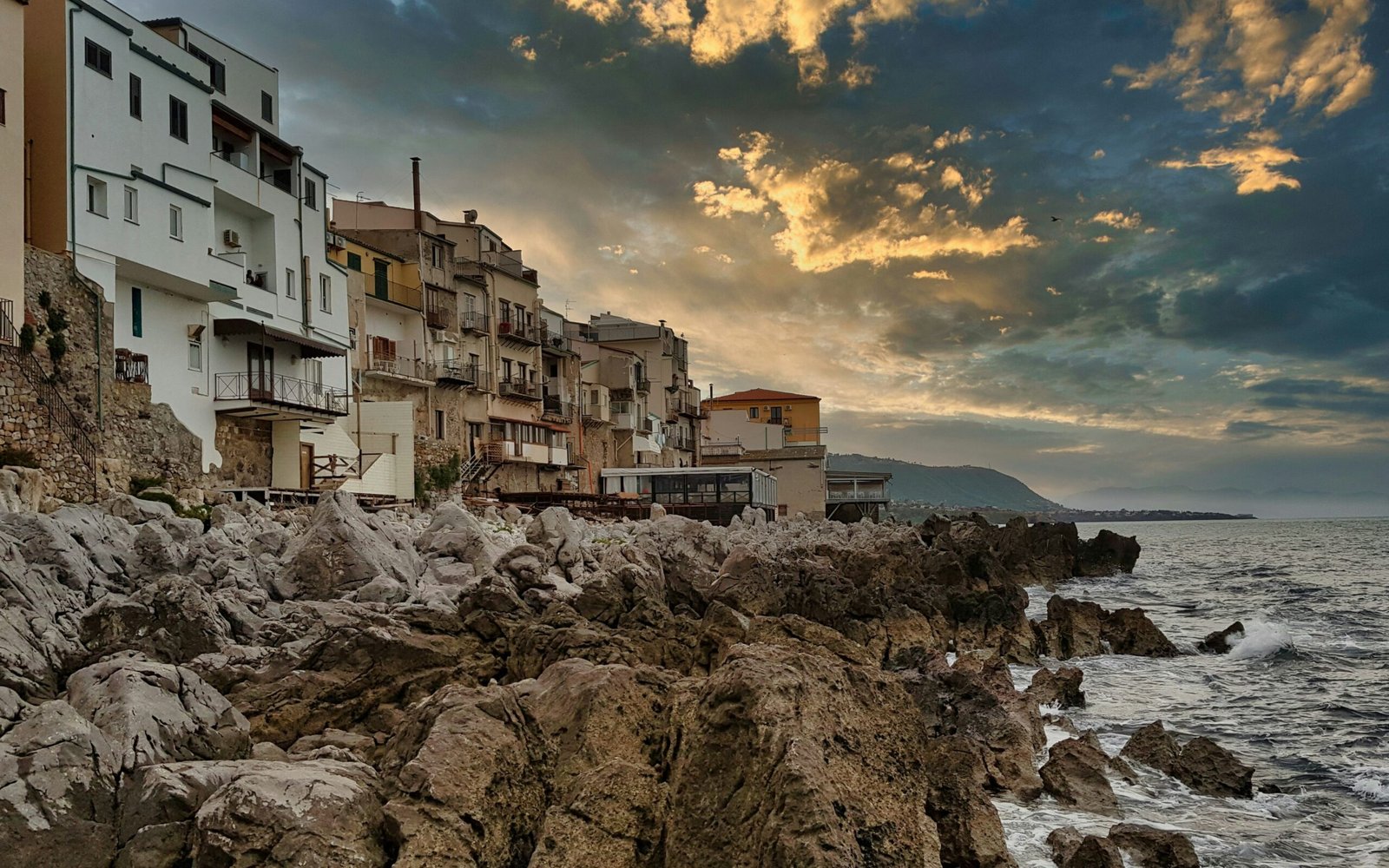
Photo: smirik / Unsplash
The main gateways are Palermo Airport (PMO) and Catania Airport (CTA). If the trip includes Etna, Taormina, and Syracuse, CTA saves 60–90 minutes of accumulated transfer time. If your priorities are Agrigento, Trapani, Cefalù, and the Aeolian Islands via Milazzo, PMO creates a better balance. The A19 connects Palermo and Catania in roughly 2h10–2h30 depending on roadworks. The A20 Palermo–Messina is more stable, with tolls of around €1.70–3.70 on common stretches. Regional trains are generally reliable, although delays of 10–20 minutes are not unusual on summer afternoons.
Ferries from Naples to Palermo or Termini Imerese allow you to avoid a domestic flight, but they mean 9–11 overnight hours. This can make sense if you are traveling with a car and want to avoid spending €120–160 on a long rental segment at destination. For the Aeolian Islands, Milazzo is the critical point: roughly 70% of the connections to Lipari, Vulcano, and Salina leave from there. In high season, reserving 48 hours ahead greatly reduces the risk of being shifted 2–3 hours later.
Where to stay
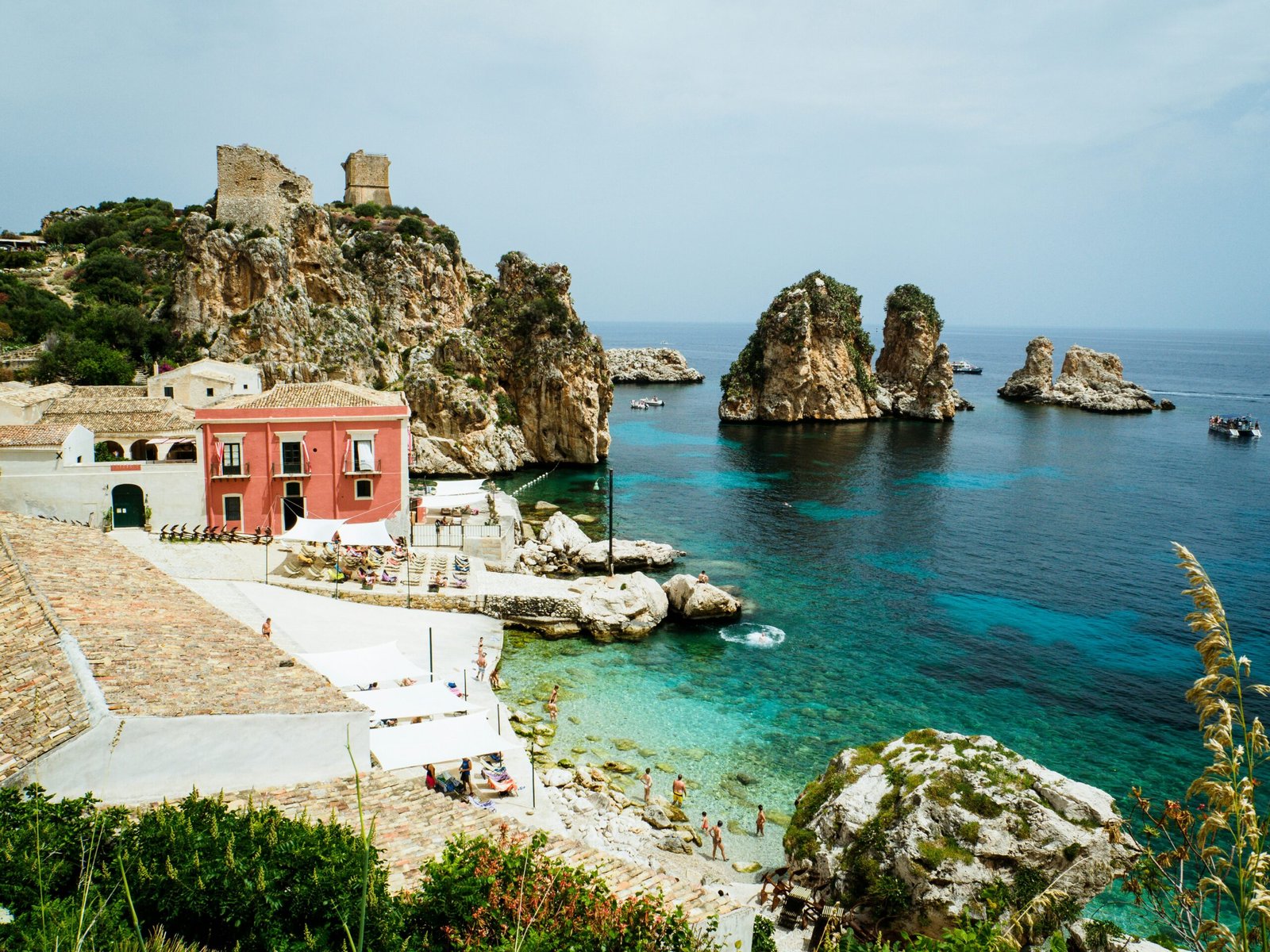
Photo: ro_bee / Unsplash
Split the island into hubs. Palermo for the west — Cefalù, Monreale, Trapani — and Catania for the east — Etna, Taormina, Syracuse, Noto. In Palermo, staying outside the ZTL reduces potential fines of €90–110 and eliminates around 20 minutes of daily maneuvering. In Catania, the Via Etnea/Teatro Bellini axis makes public transport easier and improves early access to Etna buses. For Ortigia in Syracuse, sleeping inside the historic island means dragging luggage 300–600 meters; if you arrive after 19:00, warn your accommodation because the ZTL may already be active.
In Taormina, prioritize hotels that include parking at Lumbi or Porta Catania. At €12–18 per day, that can save you 25–40 minutes of searching. In Cefalù, a B&B 600–800 meters from the Duomo is often the sweet spot between price and night noise. For the Aeolian Islands, Lipari works best as a base: more frequent departures and scooter rental sorted in 10 minutes. Near Agrigento, sleeping in San Leone saves 15 minutes going out and 15 coming back from the Valley, while leaving you in a better position for sunset without crossing the city.
Where to eat
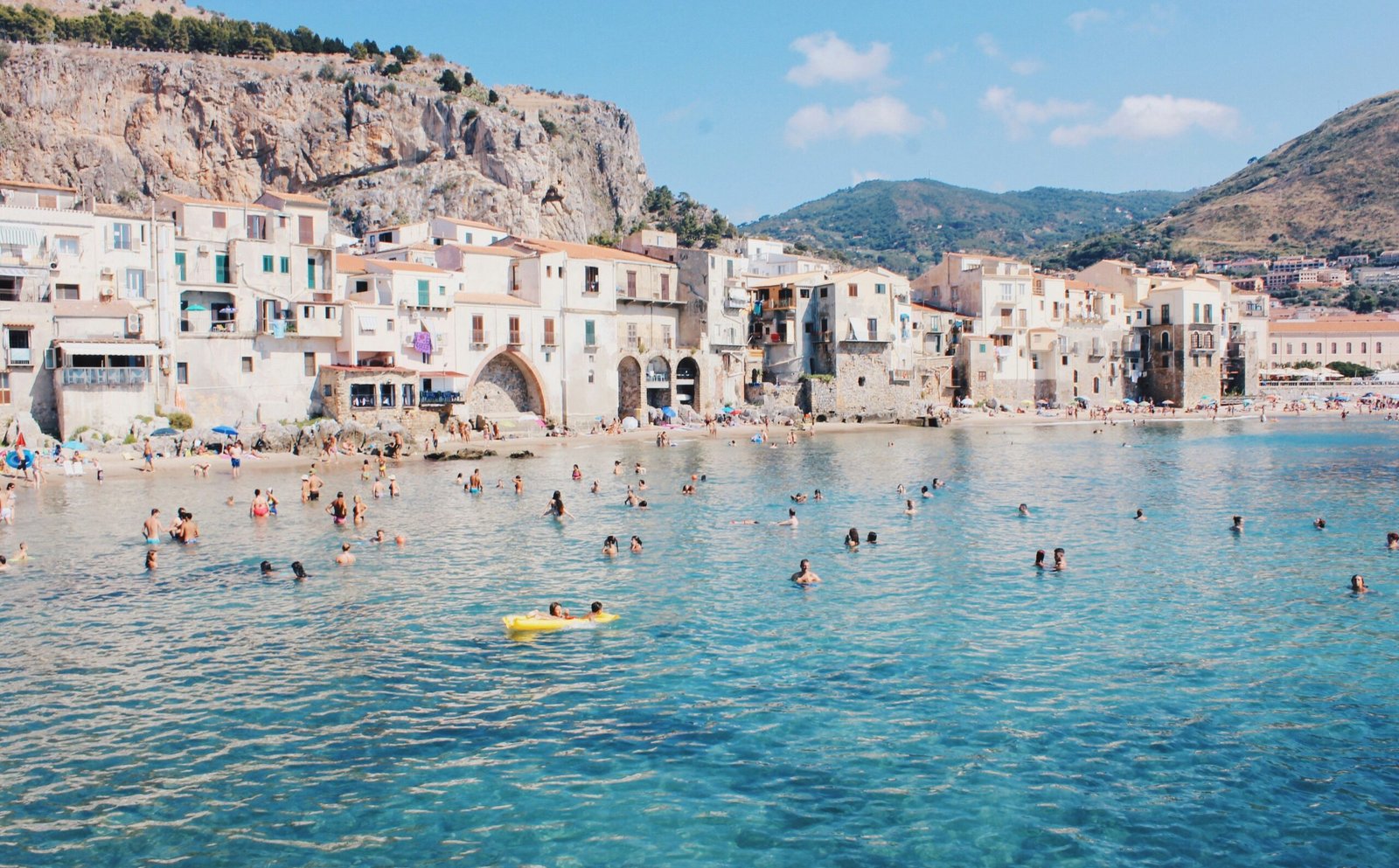
Photo: ro_bee / Unsplash
Markets are your best first operational contact. In Palermo, Capo and Ballarò between 9:00 and 12:00 for sfincione and panelle without 15-minute queues. In Catania, use La Pescheria early: buy 200–300 g of fish and have it cooked in trattorias that accept market fish for a €8–12 per person preparation fee. In Ortigia, kiosks around Fonte Aretusa serve arancini and granita; avoid the 13:30–14:30 slot if you are traveling with children or a tight schedule.
Italian kitchen rhythm is clear: lunch 12:30–14:30, dinner 19:30–22:30. In between, many kitchens close. In Noto, gelaterias and pastry shops cover the gap; in Taormina, the funicular can move you 10 minutes down to Mazzarò for a quick bite, avoiding both queues and the Corso Umberto surcharge. In Trapani, consider fish couscous; order smaller portions, 300–350 g, so you can try more things without paying for excess you will not finish.
Practical travel tips
Photo: avivace / Unsplash
1) Rent a car to explore the island more freely, but only with a pre-defined parking strategy. Freedom exists if you reduce parking friction. In Taormina, go directly to Lumbi before 10:00; after that, the funicular may add 12–18 minutes of waiting. In Palermo, book accommodation with parking or outside the ZTL and walk 600–900 m. Micro-scene: 09:40, Parking Lumbi, Taormina. Ticket in 2 minutes, elevator, funicular at 09:48, on top at 09:58. You save 25 minutes compared with arriving at 10:30.
2) Carry cash: in smaller towns you will still see “solo contanti”. In Noto and villages in the Iblei area, bakeries and cafés may reject cards for purchases under €10. Withdraw €100–150 in Catania or Palermo to cover 2–3 days. Micro-scene: 13:10, roadside bar between Avola and Noto. Bill comes to €8.50 for coffees and water. The card terminal “doesn’t work” and the nearest ATM is 650 m away, a 9-minute detour under 31 °C. Cash keeps you moving and prevents bad parking decisions made in a hurry.
3) Visit local markets to adjust both rhythm and costs. Capo and Ballarò in Palermo, or La Pescheria in Catania, concentrate fresh product and active local schedules. Buy fruit for the day, €2–4 for 500 g, and water at €0.50–1. Micro-scene: 08:45, La Pescheria. You ask for 200 g of anchovies and one lemon for €3.20. You eat at 12:30 on a shaded bench, avoid a tourist table at €22–28, and keep the itinerary moving without a long stop. Gain: 40 minutes and €18–24 per person.
4) Book accommodation in advance in high season, June through September. Taormina, the Aeolian Islands, and Ortigia push prices up by 20–35%. Locking in 30–45 days ahead avoids jumps of €30–60 per night. Micro-scene: 21:20, you search for a hotel in Lipari two days before arrival. Ferries are still available, but the last room is triple your intended budget: €180 instead of €110. Booking four weeks earlier, you would have stayed in the €115–125 range and confirmed a scooter at €35/day as well. Operational margin closed.
5) Use sunscreen and a cap, especially in summer; this is not soft advice, it is logistics. Heat slows decisions and extends walking times. Micro-scene: 14:05, Valley of the Temples, Concordia–Juno stretch, 1.2 km. Without shade, the walk rises from 12 to 18 minutes; without a cap, you stop twice, 3 minutes each time, to recover. With a hat and 500 ml of water, €1 at a kiosk, you save 10–12 minutes on the circuit and reduce the irritability that later leads to poorer decisions.
6) Learn a few basic phrases in Italian to gain efficiency in small tasks. Asking for the scontrino or “what time does the kitchen close?” avoids surprises. Micro-scene: 14:25, trattoria in Syracuse. You ask if there is still a quick first course available. They tell you the kitchen closes in 5 minutes, so you switch to takeaway arancini and eat in the shade of Piazza Archimede. You save a 45-minute wait until 19:30 and avoid spending an extra €15–20 per person on a second meal later.
7) Check ferry schedules if you are heading to the Aeolian Islands and build in a 45-minute margin. In Milazzo, boarding gets dense between 08:00 and 09:30. Micro-scene: 08:10, ticket window with 18 people ahead of you, averaging 1.5 minutes per passenger: 27 minutes. With an online ticket and QR code, you move straight into boarding and use the saved margin for a coffee and water. Loss avoided: missing the ferry and being moved 2–3 hours later.
8) Prioritize family-run trattorias to try local food with better control over time and cost. Short menus, faster turnover. Micro-scene: 20:05, Palermo, a trattoria in Kalsa. You order sardines a beccafico, €10–12, and pasta con le sarde, €10–11. Food arrives in 12–15 minutes. Full dinner in 40 minutes, and you are walking back to your accommodation by 20:50, avoiding the 21:00 peak with 20–30 minute waits in more tourist-heavy places. Time and budget under control without sacrificing flavor.
9) Wear comfortable shoes for cobbled streets and stairs. Taormina, Cefalù, and Ortigia punish hard soles. Micro-scene: 11:40, climb to the Teatro Antico in Taormina. With stable trainers, you cover 600 m in 8 minutes. With flat sandals, it takes 12–14, with two stops. Four minutes here, seven there: by the end of the day you have lost 30 minutes just to small avoidable pauses. On uneven ground, logistics start at your feet.
10) Respect siesta hours: many shops close at midday. Between 13:30 and 16:00, buying a SIM, getting a power bank, or solving a small ZTL document issue may require multiple attempts. Micro-scene: 15:05, phone shop in Noto, closed. Alternative is 1.1 km away, open; you arrive at 15:25 and they serve you in 12 minutes. Without anticipating this, you postpone it to the next day and your data-free navigation costs you 25–35 minutes of avoidable detours that afternoon.
11) Activate intermodal mode: combine train and local rental. Palermo–Cefalù by regional train, 55–65 minutes, then scooter in Cefalù at €25–35/day. Micro-scene: 08:00 train, 09:02 scooter pickup 300 m from the station, beach by 09:20. You avoid two tolls, 120 km round trip, and €12–18 in parking. A cleaner equation with less urban traffic stress and more budget left for a better dinner.
12) For Etna, lock the morning and manage your layers. The cable car from Rifugio Sapienza usually opens around 09:00; if you arrive at 08:30 you can park in 3–5 minutes. Micro-scene: 12:10, wind and 12 °C at 1,900 meters. You put on a second layer and light gloves. Another traveler without a jacket buys extra clothing for €30 and descends 40 minutes earlier because of the cold. With the right kit, a light mid-layer and windbreaker you already own, you gain one more hour of exploration and avoid €60 in improvised rentals or purchases.
13) At the Valley of the Temples, use the combined ticket and reverse route at sunset. Entering from Porta di Giunone at 17:30 gives you gradually improving shade. Micro-scene: 19:05, golden light at Concordia, cleaner photos after groups leave between 18:30 and 18:45. Combined ticket at around €12–13.50. Without this order, you enter at 16:00 through the central zone, walk in 32 °C heat, and spend 20% more on water. Gain: 15–20 minutes and much better thermal conditions.
14) Define transfer days with minimal objectives. When changing hubs, for example from Palermo to Catania, do not force in three dense visits. Micro-scene: 10:00 departure from Palermo, A19, 10:55 stop for coffee and fuel, 8 plus 12 minutes. Arrival in Catania at 13:05, check-in at 13:30, one single goal left: the market and a short 1.8 km walk. Without this rule, you force Taormina that same day and lose 70 minutes on parking plus 40 on the funicular, with fatigue that becomes expensive the next day.
Common mistakes and what not to do
Photo: alex_gruber / Unsplash
1) Underestimating distances and travel times between cities. The map lies: Palermo–Agrigento may look straightforward, but with stops and traffic it becomes 2h15–2h40. Micro-scene: 16:20, you arrive late to San Leone, the sun is dropping, and you miss the Valley at sunset. Result: you duplicate the visit the next day, plus 60–80 km added. Solution: plan your stretches with a 15% buffer and define only one major afternoon objective.
2) Not checking the opening hours of key sites. In Ortigia, some places close 13:00–16:00; in Noto, churches often follow similar pauses. Micro-scene: 12:55, you reach Noto Cathedral and it closes in 5 minutes. You lose a three-hour window. Consequence: you rebuild the day, eat later, and wake later the next morning, accumulating 40 minutes of lost time. Check the day before and plan to arrive 45 minutes before closing.
3) Forgetting to reserve popular attractions. Taormina’s Teatro Antico and Aeolian ferry tickets both collapse under demand. Micro-scene: 10:20, a line of 70–90 people, 25–35 minutes of waiting under 29 °C. With advance purchase, you pass in 5–7 minutes. Without a ferry booking, you may be moved 2–3 hours later and lose half the day. Solution: lock it in 48–72 hours early and use the 09:00–10:00 range.
4) Ignoring ZTL restrictions in historic centers. Entering Palermo, Catania, or Syracuse by mistake can mean a €90–110 fine. Micro-scene: 19:10, you trust the GPS, drive 200 m into the restricted zone, and a camera records you. The letter arrives weeks later. Solution: disable “avoid tolls” if that pushes you into central shortcuts, enable “avoid restricted zones” when possible, or park 600–900 m away and walk 10–12 minutes.
5) Leaving valuables visible in a rental car. A bag on a seat near San Leone or Mazzarò is an invitation. Micro-scene: 15:40, you stop “just for a quick look.” Broken window, repair paperwork, and 2–3 hours gone, plus a €250–500 excess. Solution: empty cabin, planned stops, backpacks with you, and a light lock for soft luggage if needed.
6) Not accounting for heat and failing to hydrate. Between June and September, 30–35 °C changes everything. Micro-scene: 13:30, Valley of the Temples, 1.8 km to cover with only 250 ml of water. You feel dizzy, stop 10 minutes in the shade, and lose 20–25 net minutes while shortening the visit. Solution: 1–1.5 liters per person, bought in supermarkets at €0.20–0.40 per 500 ml instead of €1.50–2 on-site.
7) Assuming kitchens stay open all day. Between meal shifts, the answer is usually “bar open, kitchen closed.” Micro-scene: 15:10, Taormina, you are the third person asking for pasta outside kitchen hours; they ask you to come back at 19:30. You improvise with a €12–14 snack per person and then still pay for dinner later. Solution: lunch 12:30–14:00, dinner 19:30–21:00; outside that, use a bakery or street food.
8) Not learning the local driving logic. Roundabouts and right of way can surprise you. Micro-scene: 09:15, roundabout near Catania access, you hesitate, brake sharply, horns behind you. Real risk and lost time. Phone-at-the-wheel fines range from €165 to €660. Solution: one designated driver, no phone in hand, clear limit awareness, and extra margin in busy merges.
9) Not carrying suitable clothing for churches and religious sites. Covered shoulders and appropriate leg coverage still matter in some places. Micro-scene: 12:05, Monreale, entry denied. You buy a scarf for €5–7 and wait 15 minutes. You lose the best light window. Solution: one lightweight multi-use garment in your bag and the problem disappears.
10) Skipping travel insurance or full rental coverage. A flat tire on a secondary road can cost €120–180 and two hours. Micro-scene: 18:20, returning from Noto, no tire coverage, 70-minute tow wait, extra payment. With full coverage, €10–18/day, you change the car in 20–30 minutes and keep the day alive.
11) Improvising the Aeolian Islands as a day trip with no margin. Sea and wind decide. Micro-scene: 07:50, Milazzo, 60-minute delay announced; your Vulcano excursion is now broken. Reprogramming costs €15–20 and you lose the fumarole climb window. Solution: sleep in Lipari or leave a 24-hour margin with flexible tickets.
12) Forcing too many scenic stops on secondary roads. Every stop adds 6–10 minutes between parking, photos, and restarting. Micro-scene: 17:10, SS114, you make three extra stops. You reach Taormina at 18:00 instead of 17:20, and the funicular now has a 20-minute line. With two planned stops and one defined viewpoint, the real difference is half an hour saved.
Safety and recommendations

Photo: kornyeir / Unsplash
Safety in Sicily is mostly about operational anticipation and reading urban rhythm correctly. In high-density pedestrian areas, the real risk is friction: stumbling, exposed wallets, and erratic decisions. Micro-scene: 18:10, funicular exit in Taormina; 100–140 people per minute pour toward Corso Umberto, many stopping with phones held up. Recommendation: put away visible items 60 seconds before exiting, walk close to the façade for the first 80–120 m, and only then slow down once the flow stabilizes. This simple maneuver reduces direct exposure by roughly 70% and avoids the shoves that can cost you 5–8 minutes. In markets like Ballarò in Palermo, assign roles: one pays, one watches. Avoid counting cash in public; prepare €10–20 in a front pocket and keep the rest inaccessible.
Use defensive driving and secure parking. Micro-scene: 21:25, outskirts of Catania, searching for free parking. Three loops later, 11 minutes lost, and the only option left is 450 m away on a dark street. Alternative: guarded parking at €7–10 per night, 300 m from the hotel. Recommendation: for every extra urban kilometer you drive at night, the chance of a minor scrape rises. Buy peace with formal parking and gain a 15-minute walk on a lit route. Keep triangle and reflective vest easy to reach; if you puncture on the SS115 at 18:40, pull at least 1 m off the lane and call assistance. A visible vest alone changes the risk equation. Keep at least one-third of a tank: between Noto and Ragusa you can cover 30–40 km without finding a 24-hour station.
Manage heat and crowds in archaeological sites. Micro-scene: 13:50, Valley of the Temples, 32 °C, scarce shade, and 1.8 km still ahead. Recommendation: schedule technical shade pauses every 25–30 minutes, 4–5 minutes each, and keep 1 liter of water per person plus light salts if you sweat heavily. Buy water in town, €0.30–0.50 per 500 ml, instead of paying €1.50–2 at kiosks inside the site; for a group of four over three hours, that saves €8–10. If you detect a group of 40 entering, move 120–150 m ahead and reverse your visit order. Golden rule: never stay still under direct sun. Moving 200 m can place you in a completely different crowd dynamic and lower perceived heat.
At ferries and ports, avoid last-minute improvisation. Micro-scene: 07:55, Milazzo, line for Lipari boarding, loudspeaker announces random document checks; one in every twenty passengers takes 3–4 minutes longer. Recommendation: keep your QR code and ID in hand, consolidate your backpack, and position yourself 10–15 m before control with visual awareness of the line. If you travel with a car, leave the cabin visually empty; a quick check saves 8–10 minutes and avoids opening the trunk in public. On night arrivals, around 21:30–22:30, prearrange transport to your accommodation: a fixed €10–15 taxi for 1–2 km is worth more than 18 minutes dragging luggage over irregular steps. Safety here often means not exposing fatigue.
Manage interactions and soft scams intelligently. Micro-scene: 23:05, Palermo, Garraffello area; a self-appointed helper points you to a parking spot and asks for €2–3. Recommendation: stay polite but firm: “Grazie, è a posto,” then walk away decisively. If you do pay, use exact coins and never open your full wallet. In bars with a vague coperto, ask for the receipt; if the total jumps 10–15% without reason, ask for the breakdown. That resolves most cases without drama. At outdoor ATMs, cover the PIN and avoid withdrawals late at night if you are alone; one daytime withdrawal of €200–300 for 3–4 days is both safer and more efficient.
Frequently asked questions
What is the best time to visit Sicily? Spring, April to June, and autumn, September to October, offer the best climate-volume balance. In May, highs often sit around 22–26 °C, and the sea in the south is already usable. In October, water remains pleasant. Operationally, queues drop 30–50% compared with August, and accommodation prices often fall 15–25%. Traffic on the A18/A20 also becomes lighter on weekends. If you want Etna with snow, aim for February–March and bring proper gear.
Is it necessary to rent a car in Sicily? Not always, but it optimizes non-linear routes. If your axis is Palermo–Cefalù–Monreale, train and bus can work. For Taormina, Syracuse, Noto, and beach combinations, a car often saves 60–120 minutes a day compared with buses and transfers. A middle ground is train to the main hubs and local scooter rental at €25–35/day. For the Aeolian Islands, avoid taking a car unless truly necessary: ferry tickets cost more and parking in Lipari adds friction.
Can you drink tap water in Sicily? In major cities such as Palermo, Catania, and Syracuse, yes; in rural areas it varies. Look for “acqua potabile” signs on public fountains. For long days, buy 2-liter bottles at €0.40–0.70 and refill your own bottles. That prevents paying €1.50–2 for 500 ml in tourist-heavy areas. If your stomach is sensitive, use bottled water consistently for the first 48 hours as a low-cost stabilization measure.
How many days are recommended to explore Sicily? Minimum 7 days for a basic east-west overview; 10–14 for a steadier rhythm that includes the Aeolian Islands or baroque routes. With 7 days: Palermo, 2; Cefalù and Monreale, 1; Catania, 1; Etna plus Taormina, 1; Syracuse and Ortigia, 1; Noto and Avola, 1. With 12 days, add Agrigento and one Aeolian island. Treat transfer days as low-load days so fatigue does not accumulate.
Is it safe to travel around Sicily? Yes, with operational caution: watch your pockets in dense zones and choose formal parking at night. Hard scams are not the norm; soft ones, inflated charges and unsolicited parking help, fade quickly when you ask for receipts and stay decisive. On the road: respect limits and keep your phone away. At night, choose lit streets and short transfers; city taxis typically run €8–15 for 1–3 km. Peace of mind often comes from these small decisions.
How do I organize Etna without a tour? Arrive at Rifugio Sapienza around 08:30–08:45, park in 3–5 minutes, buy the cable car ticket, and carry layers and water. The full up-and-down block usually takes 3–4 hours. Check the wind forecast because partial closures are common. If you go from the north via Piano Provenzana, the route is less crowded and often 2–4 °C colder. In winter, do not force the summit without proper traction gear.
What is the best base for the Aeolian Islands? Milazzo is the logical mainland gate because of frequency. On the islands, Lipari is the most flexible base: more accommodation, quick scooter rental, and easier ferry links to Salina and Vulcano. For Stromboli, sleep on the island; day returns limit climbing options and the sea remains in control. Buy tickets 24–48 hours in advance in high season and arrive 45 minutes before boarding.
How do I avoid ZTL fines? If in doubt, do not enter. Park 600–900 m from the center and walk. Ask your accommodation 24 hours in advance if they can register your license plate; many receptions do. Configure your GPS to avoid restricted zones and, if you make a mistake, do not try to fix it by turning around inside the zone — just exit immediately. A typical fine runs €90–110 and often arrives internationally weeks later. It is an avoidable cost solved with three minutes of reading signs.
🧭 Explore more related destinations
GlobeVision™ — Strategic travel guide system
Island destinations depend on ferries, weather, and narrow logistical windows. Poor planning can easily double both time and cost. In destinations with elevated costs, better decisions can save dozens or even hundreds of euros during the trip.
See travel strategies on GlobeVision
Conclusion
The Sicilian equation is simple: well-defined zones, clear time windows, and measured margins. Palermo and Catania as hubs, Taormina and Ortigia on foot, Etna with layers, and ferries with reservations. You replace uncertain waits with decisions backed by numbers: 25 minutes saved on a funicular, €90 avoided in a ZTL fine, 40 minutes recovered by buying the ferry in advance. It is not a trick; it is method. You travel better when the island stops surprising your schedule.
📊 GlobeVision™ Indicators
High
Medium
High
High