
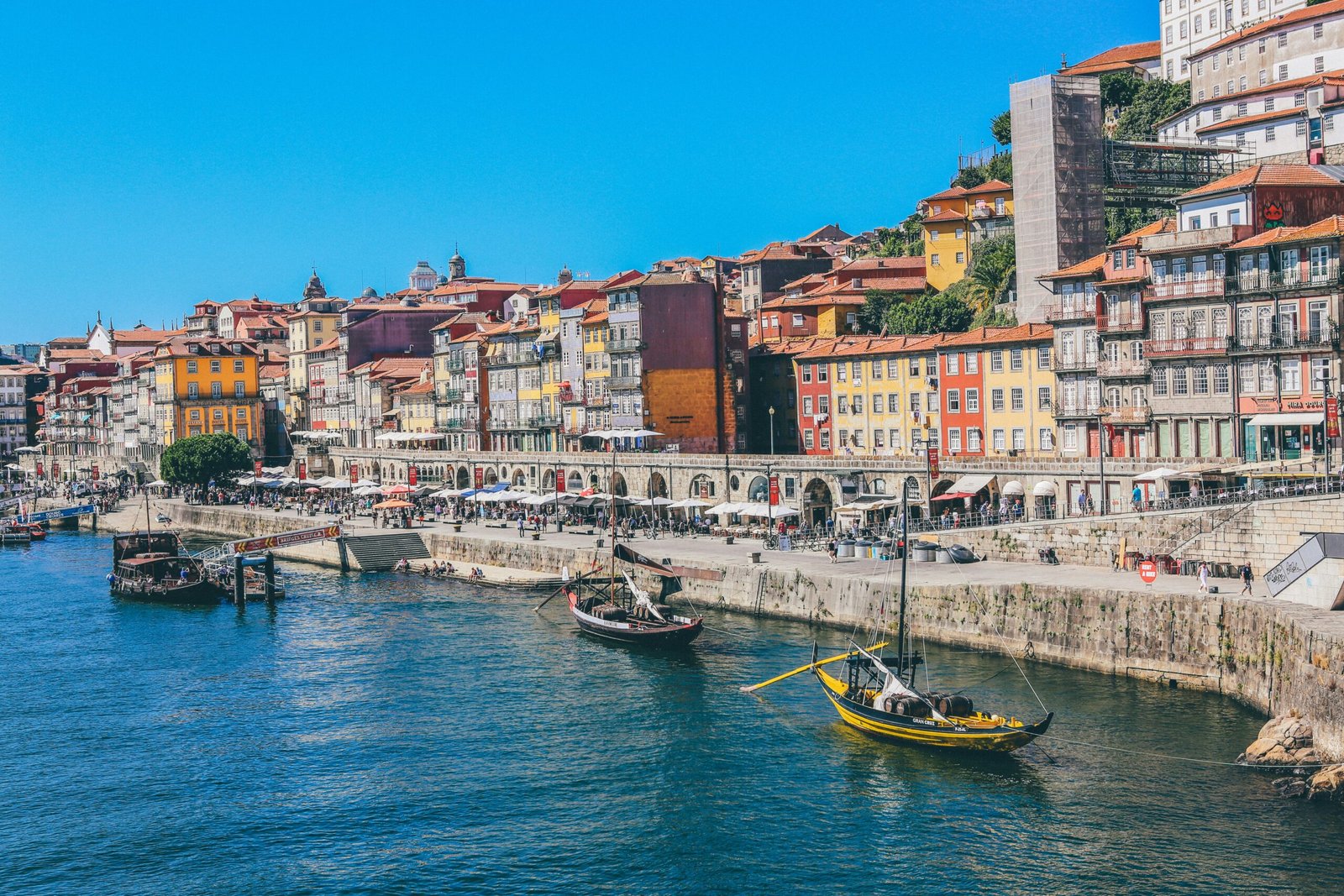
GlobeVision™ — Pillar guide to organize Portugal with judgment: how to choose regions, connect Lisbon, Porto, the Algarve, Madeira and Sintra, avoid logistical mistakes and structure an efficient trip without wasting time, money or energy.

How do you organize an efficient trip to Portugal?
The smartest way to travel through Portugal is to divide the country into blocks: Lisbon and Sintra, Porto and the north, the Algarve, Alentejo and the Atlantic islands. For a first trip, the ideal amount is between 7 and 14 days, choosing a linear route and not trying to mix too many distant areas in just a few days. Portugal looks compact, but mistakes with base, transport and season can cost you many hours.
- Introduction
- Strategic map of Portugal
- Main regions and destinations
- Recommended itineraries by number of days
- How to get to Portugal
- How to get around Portugal
- Where to stay depending on your type of trip
- Where to eat and what to try
- Best time to travel
- Approximate budget
- Practical tips
- Common mistakes to avoid
- Safety and recommendations
- Frequently asked questions
- Conclusion
Introduction
Portugal is one of the most complete destinations in Europe: historic cities, Atlantic coastline, white villages, volcanic islands, good gastronomy, reasonable prices and a scale that seems easy to manage. But that apparent simplicity can be misleading. The common mistake is thinking that, because it is a compact country, everything can be combined without consequences.
In practice, Portugal works through very different blocks. Lisbon and Sintra require urban planning and queue control. Porto and the north work better with a logic of train, river and nearby day trips. The Algarve depends heavily on the car, the season and the chosen bases. Madeira is not organized by kilometers, but by roads, weather and altitude. And Alentejo needs another rhythm: less rush, more road time and more margin.
This guide works as the pillar article of the Portugal cluster in GlobeVision™. From here, you can go deeper into specific guides such as Lisbon, Porto, Sintra, Algarve and Madeira.
The idea is not to see everything. It is to build a route that makes sense, reduce useless transfers, choose good bases and avoid the mistakes that turn a beautiful trip into a sequence of waits, hills, check-ins and decisions made too late.
Strategic map of Portugal
Portugal should be organized as a network of areas, not as a list of places. Lisbon can work as an entry point, but it is not always convenient to return to it at the end. Porto is ideal if you want to explore the north. Faro is the logical gateway to the Algarve. Madeira and the Azores require their own flights and should not be added as a “quick extra” inside a tight continental route.
| Block | Main base | Recommended days | Most logical transport | Main risk |
|---|---|---|---|---|
| Lisbon + Sintra | Lisbon | 3-5 days | Metro, train and tram | Underestimating hills, queues and transfers |
| Porto + north | Porto | 2-4 days | Train, bus and day trips | Not calculating wine cellars, viewpoints and slopes well |
| Algarve | Lagos, Faro, Tavira or Carvoeiro | 4-7 days | Car or well-chosen base | Crossing the region every day |
| Alentejo | Évora or inland villages | 2-4 days | Car | Slow rhythm and low transport frequency |
| Madeira | Funchal | 5-7 days | Car, tours or flexible base | Weather, roads and altitude |
| Azores | São Miguel / Ponta Delgada | 5-8 days | Car and internal flights | Adding too many islands in too little time |
Main regions and destinations in Portugal
Lisbon
Lisbon combines historic neighborhoods, viewpoints, trams, local life and urban logistics that are more demanding than they seem. Alfama, Baixa, Chiado, Bairro Alto and Belém are not enjoyed in the same way if you mix them without order. Hills, heat, crowded trams and queues can break a poorly planned day.
To go deeper, review the guide to what to know before traveling to Lisbon, where we cover neighborhoods, practical mistakes, transport and visit structure.
Sintra
Sintra is usually visited from Lisbon, but it does not work as a simple day trip. It has hills, saturated buses, timed tickets, scattered monuments and very high tourist demand. In one full day you can see 2 or 3 main places; trying to do more usually turns the visit into a race.
Before going, it is worth reviewing the specific guide to Sintra, especially if you want to combine Pena Palace, the Moorish Castle and Quinta da Regaleira without losing hours.
Porto and the north
Porto is more compact than Lisbon, but it also has slopes, bridges, schedules and its own logistics. The city works very well for 2 or 3 days, and can be combined with the Douro Valley, Braga, Guimarães or Aveiro if you have more margin.
To organize it with less friction, review the guide to Porto without surprises, especially useful for choosing accommodation and avoiding rhythm mistakes.
Algarve
The Algarve is not just beach. It is an elongated region where the chosen base completely changes the trip. Lagos, Carvoeiro, Albufeira, Faro and Tavira serve different profiles. In summer, mistakes with parking, traffic and unbooked activities become expensive.
If your trip includes coast, use the Algarve guide to decide base, days, car, Benagil, beaches and real rhythm.
Madeira
Madeira is Portugal, but it is not organized like mainland Portugal. Here, mountain roads, altitude, changing weather and the need to group routes by sectors dominate the trip. Funchal works very well as an initial base, but a longer stay can benefit from a second base.
The Madeira guide will help you avoid mistakes with car rental, hiking, levadas, Pico do Areeiro, Porto Moniz and Ponta de São Lourenço.
Alentejo
Alentejo is less touristy and slower. Évora, Monsaraz, Marvão, Vila Viçosa or the Vicentine Coast require a car and another mindset. It is not a region to squeeze between Lisbon and the Algarve unless you have enough margin.
Recommended itineraries by number of days
The perfect route through Portugal depends on your real number of days, not on the number of places you want to tick off. In 7 days, it is better to concentrate. In 10, you can combine two major blocks. In 14, you can already design a complete route without rushing so much.
| Available days | Recommended route | Ideal for | What to avoid |
|---|---|---|---|
| 5 days | Lisbon + Sintra | Short first visit | Adding Porto or Algarve without margin |
| 7 days | Lisbon + Sintra + Porto | Classic cultural route | Changing base every night |
| 10 days | Lisbon + Sintra + Porto + Algarve | Complete first trip | Trying to cover the whole Algarve |
| 12-14 days | Lisbon + north + Algarve + Alentejo | Broad mainland route | Not splitting bases on the coast |
| 7 island days | Complete Madeira | Nature and hiking | Combining Madeira with mainland without extra days |
✈️ Compare flights before closing the route
Flights and connections
Portugal works better if you choose the right arrival and departure airports. Entering through Lisbon and leaving from Porto, or arriving through Faro if you are going to the Algarve, can save you hours of unnecessary return travel.
How to get to Portugal
Portugal has three key airports for most travelers: Lisbon, Porto and Faro. Lisbon is the most common entry point. Porto is very practical for the north. Faro is the logical gateway to the Algarve. Madeira and the Azores require specific flights to their island airports.
| Airport | Best for | Advantage | Risk if chosen poorly |
|---|---|---|---|
| Lisbon (LIS) | Lisbon, Sintra, central Portugal | More flights and connections | Returning from the Algarve or Porto can make you lose half a day |
| Porto (OPO) | Porto, north, Douro Valley | Ideal to start or finish a northern route | Not convenient if your whole trip is the Algarve |
| Faro (FAO) | Algarve | Direct access to the southern coast | Few advantages if your route is Lisbon + Porto |
| Funchal (FNC) | Madeira | Direct entry to the island | Should not be treated as a quick excursion from Lisbon |
From Spain, you can also arrive by car or bus, especially from Galicia, Extremadura, Andalusia or Madrid. Even so, for a first trip, flying is usually more efficient if you want to optimize days. The key is not to book flights only by price: a cheaper ticket can force you to return to the initial point and lose many hours.
How to get around Portugal
Getting around Portugal is relatively simple, but each area requires a different solution. The train works well between Lisbon, Porto, Coimbra, Aveiro and Faro. Buses cover many secondary routes. The car gains value in the Algarve, Alentejo, inland villages and natural routes.
| Transport | When it makes sense | Advantage | Main risk |
|---|---|---|---|
| Train | Lisbon, Porto, Coimbra, Faro | Comfortable and relatively efficient | Does not always arrive near beaches or villages |
| Bus | Secondary routes and lower budget | Good coverage | Less flexible schedules |
| Car | Algarve, Alentejo, Madeira, rural areas | Freedom and access to difficult places | Parking, tolls and urban driving |
| Metro / tram | Lisbon and Porto | Useful to move without a car | Hills and transfers can be more tiring than expected |
| Ferry / boat | Ria Formosa, islands, Madeira, Azores | Access to beaches and islands | Depends on schedules, weather and season |
📶 Keep maps, tickets and bookings available
Mobile data
In Portugal, maps, train schedules, digital tickets, accommodation bookings and car routes are constantly checked. An eSIM helps especially in the Algarve, Madeira and rural areas where improvising without connection can become expensive.
Where to stay depending on your type of trip
Accommodation in Portugal should not be chosen only by price. In Lisbon and Porto, a poorly connected area can force you to climb hills, depend on taxis or lose time every day. In the Algarve, a poorly chosen base can make you cross the region constantly. In Madeira, not having parking or sleeping too far from your routes can condition the whole stay.
| Type of trip | Recommended area | Advantage | GlobeVision™ tip |
|---|---|---|---|
| First urban visit | Central Lisbon / central Porto | Walking access and transport | Avoid cheap accommodation on very distant hills |
| Cultural route | Lisbon + Porto | Good train connections | Choose bases near main transport |
| Beach trip | Lagos, Carvoeiro, Tavira or Faro | Access to coast and activities | Do not use one single base if you want to see the whole Algarve |
| Nature | Madeira, Azores, Alentejo | More freedom and quieter surroundings | Prioritize parking, road access and real location |
| Slow travel | Alentejo, rural north, islands | Less saturation | Do not fill every day with transfers |
Where to eat and what to try
Portugal is one of the European countries where you can still eat very well with a reasonable budget, but tourist areas can distort the experience. In Lisbon, Porto and the Algarve, it is worth moving a few streets away from the most visible axes. In villages and markets, value for money usually improves a lot.
| Dish or product | Where to try it best | Practical tip |
|---|---|---|
| Cod | Lisbon, Porto, traditional villages | Not all tourist restaurants prepare it well |
| Pastéis de nata | Lisbon and local bakeries | Better in the morning or freshly made |
| Francesinha | Porto | Heavy dish; better for lunch than late dinner |
| Sardines | Lisbon, coast and festivities | More typical in the warm season |
| Cataplana | Algarve | Ideal to share; check prices first |
| Vinho Verde and Douro wines | Northern Portugal | Worth trying outside overly touristy places |
A useful rule: if the menu is translated into too many languages, has huge photos and someone insists that you come in, it is probably not the best option. In Portugal, it usually works better to look for restaurants with local rotation, clear schedules and a simple menu.
Best time to travel
Portugal can be visited all year round, but the best time depends on the type of trip. Spring and autumn are the most balanced moments. Summer is ideal for beaches, but it also concentrates high prices and more saturation. Winter can be very interesting for Lisbon, Porto, Madeira and urban trips with fewer people.
| Season | Ideal for | Advantage | Risk |
|---|---|---|---|
| Spring | Cities, Sintra, cultural routes | Pleasant weather and good light | Easter can make accommodation more expensive |
| Summer | Algarve, coast, islands | Beaches and atmosphere | High prices, heat and sold-out bookings |
| Autumn | Complete route, Porto, Douro, Lisbon | Fewer tourists and stable weather | Shorter days from October onward |
| Winter | Lisbon, Porto, Madeira | Fewer people and better prices | Rain in the north and fewer daylight hours |
Approximate budget
Portugal is still more accessible than many destinations in Western Europe, but it should no longer be treated as a “cheap” country without nuance. Lisbon, Porto and the Algarve have increased prices for accommodation, tourist restaurants and activities. The good news is that good planning lets you control spending much better.
| Profile | Approximate daily budget | Includes | Main risk |
|---|---|---|---|
| Low | €50-75 | Hostel/simple apartment, local food, public transport | Staying far away to save very little |
| Medium | €85-140 | Decent hotel, mid-range restaurants, trains and tickets | Improvising trains or accommodation in high season |
| Comfortable | €150+ | Central hotels, car, tours and better restaurants | Depending too much on taxis or private transfers |
🎟️ Book key activities before traveling
Tours and tickets
Sintra, Lisbon, Porto, the Algarve and Madeira have activities that fill up in high season. Booking tours, tickets or experiences with margin helps protect schedules and avoid expensive last-minute decisions.
See activities and tours in Portugal
Practical tips
- Design the route by blocks, not by impulse: Lisbon, north, Algarve, Alentejo and islands work with different rhythms.
- Do not try to see everything in one week: 7 days are enough for Lisbon + Sintra + Porto, not for all of Portugal.
- Book accommodation in advance in summer: Algarve, Lisbon and Madeira can become much more expensive.
- Calculate the hills: Lisbon and Porto are more tiring than they look on the map.
- Use train between major cities: Lisbon-Porto works well; for the Algarve it depends on the base.
- Rent a car only where it adds value: Algarve, Alentejo, Madeira and rural areas.
- Do not underestimate Sintra: it requires a full day and a clear sequence.
- Avoid always eating on tourist axes: move a few streets away and check recent reviews.
- Save tickets and bookings offline: especially if you use trains, tours or ferries.
- In the Algarve, check parking and tides: many beaches change a lot depending on hour and season.
- In Madeira, leave weather margin: mountains, levadas and viewpoints do not always work with rigid schedules.
- Wear comfortable shoes: cobblestones, hills and viewpoints make the trip more physical than expected.
Common mistakes to avoid
- Treating Portugal as if everything were close: distances seem manageable, but real transfers consume time.
- Adding Lisbon, Porto, Algarve, Madeira and Sintra in just a few days: it is the perfect recipe for rushing and enjoying less.
- Choosing accommodation only by price: a bad base can cost you hours and taxis.
- Not booking Sintra strategically: arriving late and without tickets can ruin the day.
- Using one single base for the whole Algarve: if you want east and west, it probably makes sense to split the stay.
- Not checking tolls if you rent a car: especially on motorways and Algarve routes.
- Underestimating the Atlantic climate: wind, fog or rain can change plans on the coast and islands.
- Depending on public transport for rural areas: it can work, but not always with the frequency you need.
- Eating late in small villages: some restaurants close the kitchen earlier than expected.
- Not leaving margin: Portugal is better enjoyed when the itinerary breathes.
Safety and recommendations
Portugal is one of the safest countries in Europe to travel, but that does not mean there are no practical risks. In Lisbon, Porto, trams, stations and tourist areas, it is wise to watch your belongings. On beaches, cliffs and viewpoints, the biggest risk usually lies in underestimating wind, tides or uneven ground.
If you travel by car, check tolls, parking conditions and local rules. In cities, driving is not always worth it. In the Algarve and Madeira, the car can be very useful, but it requires attention: narrow roads, slopes, full car parks and weather changes.
| Risk | Where it happens most | How to reduce it |
|---|---|---|
| Pickpockets | Trams, stations, viewpoints and tourist areas | Closed backpack and important items in front |
| Fatigue from hills | Lisbon, Porto, Sintra | Comfortable shoes, breaks and realistic routes |
| Difficult parking | Algarve, historic centers, Madeira | Choose accommodation with parking or arrive early |
| Tides and sea | Algarve, Atlantic coast, islands | Check flags, tides and local warnings |
| Delays or cancellations | Flights, ferries, maritime tours | Leave margin and do not chain critical bookings |
🛡️ Protect the route against unexpected problems
Travel insurance
If you combine cities, car rental, coast, islands or outdoor activities, proper coverage can help with delays, medical issues, cancellations or unexpected problems during the trip.
Compare travel insurance options

Frequently asked questions
How many days are recommended for traveling to Portugal?
For a balanced first trip, between 7 and 14 days. With 7 days you can combine Lisbon, Sintra and Porto. With 10 days you can add the Algarve moderately. With 14 days you can design a more complete route without rushing so much.
Is Portugal a safe country?
Yes, Portugal is a very safe destination to travel. Even so, on trams, stations, viewpoints and tourist areas, it is wise to watch your belongings and avoid leaving visible objects in rental cars.
Should you rent a car in Portugal?
It depends on the route. For Lisbon and Porto it is not worth it. For the Algarve, Alentejo, Madeira or rural areas it can be very useful. The important thing is not to use a car where public transport solves things better.
What is the best time to travel?
Spring and autumn are the most balanced seasons. Summer works very well for beaches, but requires booking earlier and assuming higher prices. Winter can be interesting for Lisbon, Porto and Madeira if you want fewer people.
What route is best for a first visit?
A classic route would be Lisbon + Sintra + Porto. If you have more days, you can add the Algarve. If you prefer nature, Madeira can work as an independent 5 to 7-day trip.
Is traveling through Portugal expensive?
Portugal can be more affordable than other European destinations, but Lisbon, Porto, the Algarve and Madeira have increased prices. The real average budget depends heavily on accommodation, season and how early you book.
Is English spoken in Portugal?
Yes, especially in tourist areas, accommodation, restaurants and travel services. In small villages it may be less common, but communication is generally easy.
What mistakes ruin a trip to Portugal the most?
Trying to cover too much, choosing the wrong base, underestimating hills, not booking in summer, depending on a car in cities and treating Madeira or the Algarve as quick escapes.
Conclusion
Portugal rewards travelers who organize with judgment. It is not a difficult country, but it has enough nuances for poor planning to strongly affect the result of the trip. Lisbon, Porto, Sintra, Algarve, Madeira, Alentejo and the islands should not be mixed without logic: each area has its own rhythm, real times and critical decisions.
As the pillar article of the Portugal cluster, this guide should serve as your strategic map. From here, you can go into detail with the specific guides to Lisbon, Porto, Sintra, Algarve and Madeira, avoiding repeated mistakes and building a more coherent route from the beginning.
The key is not to see everything in one single trip. It is to choose well, connect intelligently and leave enough margin to enjoy. Portugal is better experienced when you are not chasing the itinerary, but when each stage has a clear function within the route.
🇵🇹 Continue planning Portugal with judgment
- Lisbon: practical keys, warnings and mistakes to avoid
- Porto without surprises: tips to explore the city and choose your base
- Sintra: how to organize your visit and avoid logistical mistakes
- Algarve: strategic guide to organize your trip without mistakes
- Madeira: practical guide, mistakes and tips to optimize the route