
GlobeVision™ — A logistical guide to explore Porto without surprises: how to organize your areas, where to stay, how to move between hills and what mistakes to avoid so you do not waste time, money or energy.
How should you organize an efficient trip to Porto?
The most efficient way to visit Porto is to group each day by area, stay near Baixa, Aliados or São Bento if it is your first visit, book wine cellars and Livraria Lello in advance, and never underestimate the hills. Porto looks compact, but its slopes, cobblestones and queues can easily break an itinerary that is too optimistic.

Introduction
Porto looks like an easy city: a compact center, a nearby river, historic neighborhoods and many points of interest that seem close to each other. But that first impression can be misleading. The city has constant elevation changes, cobbled streets, stairways, viewpoints on higher ground, stations at different levels and areas where walking 800 meters can feel like much more.
The first time you walk through Ribeira, climb toward the Sé or cross into Vila Nova de Gaia, you quickly understand that Porto is not organized only by distance. It is organized by slope, opening hours, energy and sequence. The difference between a smooth visit and an exhausting day often comes down to not going up and down without logic, not improvising the most popular visits and not choosing accommodation only by price.
This guide works as a practical manual for exploring Porto with better judgment: what to see, how to group areas, where to stay, how to arrive from the airport, where to eat without falling into tourist traps, what to book in advance and which mistakes to avoid if you want to enjoy the city without turning every day into a physical endurance test.
If Porto is part of a broader route through the country, it is worth combining this guide with the complete guide to traveling in Portugal, where we explain how to distribute days, regions and transfers without losing coherence.
| Key decision | Common mistake | Real consequence | GlobeVision™ solution |
|---|---|---|---|
| Accommodation | Choosing only by price | More hills, taxis and daily fatigue | Prioritize Baixa, Aliados or São Bento |
| Visits | Not booking Lello or wine cellars | Long queues or sold-out slots | Book key time slots online |
| Daily route | Going up and down without logic | Accumulated fatigue from mid-morning | Group Ribeira, Baixa, Gaia and Foz by blocks |
| Meals | Eating only in Ribeira | Higher prices and uneven quality | Look around Baixa, Bolhão, Cedofeita or Matosinhos |
Best places to visit
Porto is best enjoyed by sectors. If you try to jump from Ribeira to Clérigos, then to Gaia, then to Mercado do Bolhão and finally to Foz without a clear logic, you will end up accumulating hills, transfers and forced pauses. The city is compact, yes, but it is not flat.
| Area | What to see | Best moment | Logistical risk |
|---|---|---|---|
| Ribeira | Douro River, historic houses, classic atmosphere | First morning or sunset | Crowds and expensive restaurants |
| Baixa / Aliados | São Bento, Bolhão, Santa Catarina | Morning or light afternoon | Busy streets and saturated shops |
| Clérigos / Lello | Tower, bookshop, cafés and central squares | First slot or late afternoon | Queues and poorly timed visits |
| Vila Nova de Gaia | Wine cellars, viewpoints, tastings, river views | Afternoon | Hard climbs from the riverside |
| Foz / Matosinhos | Atlantic coast, seaside walk, seafood | Quiet afternoon | 30-45 min transfer from the center |
Ribeira and Dom Luís I Bridge
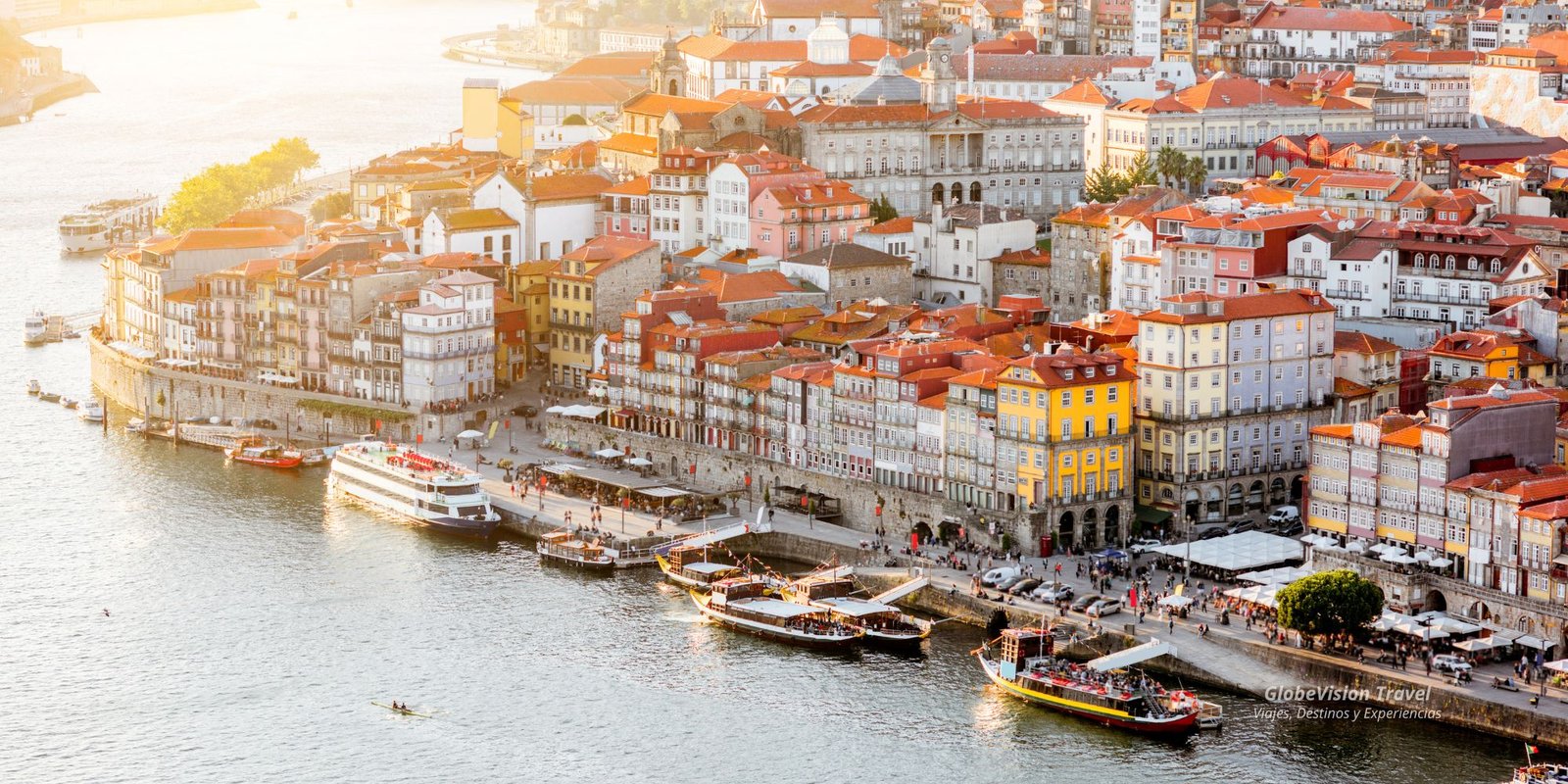
Ribeira is the most recognizable face of Porto. The façades along the Douro, the terraces, the rabelo boats and Dom Luís I Bridge create one of the strongest images of the city. But it is also one of the most congested areas, especially from mid-morning until late afternoon.
The ideal plan is to visit early if you want to walk calmly, or around sunset if you want to enjoy the light over the river. If you plan to cross into Gaia, calculate your energy carefully: going down to Ribeira is easy; climbing back up after lunch or a wine tasting can be far less pleasant.
São Bento Station and the Sé
São Bento is a very practical stop because it connects transport, the city center and heritage. Its azulejo tile panels are worth seeing, but it is better not to spend too long there if your goal for the day is to move on toward Clérigos, Bolhão or Ribeira.
Porto Cathedral, located on higher ground, offers good views and helps you understand the vertical structure of the city. The common mistake is visiting it at the end of an already intense day: the hills feel much heavier after hours of walking.
Clérigos and Livraria Lello
Clérigos Tower and Livraria Lello concentrate a large number of visitors. The bookshop in particular requires planning: buying your ticket online and choosing an early time slot can save you an hour or more in line. Do not treat it as a spontaneous stop if you are traveling in high season.
The area has cafés, shops and pleasant streets, but it can also become saturated. It works well as a mid-morning or early-afternoon block, not as a rushed extra between other demanding visits.
Vila Nova de Gaia and the wine cellars
Gaia is not just “the other side of the river.” It is an essential part of the Porto experience. The wine cellars, the views from Jardim do Morro and the riverside walk justify dedicating a full afternoon to this side of the Douro.
If you want to do a Port wine tasting or a cellar tour, book ahead. In high season, on weekends and during holidays, the best time slots fill quickly. For guided activities, tastings or Douro experiences, you can compare options on GetYourGuide or Klook.
Foz do Douro and Matosinhos
Foz can completely change the rhythm of your trip. After two days of hills, monuments and narrow streets, heading toward the Atlantic can be an excellent decision. It is not essential for a very short visit, but on stays of three days or more it adds fresh air, a seaside walk and a useful logistical pause.
Matosinhos is especially interesting if you want fish or seafood with a better value-for-money ratio than in the most touristy parts of the center. The transfer requires some planning, but it can be very worthwhile.

Realistic 3-day itinerary
| Day | Main area | Recommended plan | What to avoid |
|---|---|---|---|
| Day 1 | Baixa + Ribeira | São Bento, Sé, Ribeira, Dom Luís I Bridge | Adding Lello and Gaia if you arrive tired |
| Day 2 | Clérigos + Bolhão + Gaia | Lello early, Clérigos, Bolhão, afternoon wine cellars | Booking a tasting too late if you plan to dine in the center |
| Day 3 | Foz / Matosinhos | Atlantic walk, fish lunch, relaxed return | Going there in a rush just to “tick it off” |
How to get there
Francisco Sá Carneiro Airport is about 13 kilometers from the center and is usually the most convenient gateway. Metro line E connects the airport with Trindade in around 25-35 minutes, making it a very efficient option if your accommodation is near Baixa, Aliados or a metro connection.
If you are still comparing flights to Portugal, you can review combinations with Kiwi, especially if you want to enter through Porto and leave from Lisbon or Faro to build a linear route without returning to your starting point.
| Option | Approximate time | When it makes sense | Risk |
|---|---|---|---|
| Metro from the airport | 25-35 min to Trindade | Travelers with manageable luggage | Final stretch with hills or cobblestones |
| Taxi / ride-hailing app | 20-40 min | Night arrival or large suitcases | Traffic and higher cost |
| Train to Campanhã | Variable depending on origin | Route from Lisbon, Coimbra or the north | You still need to connect with São Bento or metro |
| Car | Flexible | Excursions outside the city | Expensive parking and an inconvenient center |
If you arrive by train from Lisbon, you will usually enter through Campanhã and then connect with São Bento. Do not underestimate that final stretch: with luggage, fatigue and rush hour, a simple connection can feel heavier than expected.
Where to stay
Choosing accommodation in Porto is not only a matter of price. The city has strong elevation changes, and that turns location into a strategic decision. A cheap room on a steep street can become expensive in terms of fatigue, taxis and daily discomfort.
| Area | Main advantage | Drawback | Ideal profile |
|---|---|---|---|
| Baixa / Aliados | Balance between center, transport and restaurants | Can be lively and noisy | First visit and practical route |
| São Bento / Sé | Close to monuments and station | Hills and uneven streets | Travelers who prioritize walking |
| Ribeira | Atmosphere and river views | Touristy, expensive and uneven terrain | Short stay with a scenic focus |
| Vila Nova de Gaia | Views and wine cellars | Crossing the river every day can become tiring | Travelers prioritizing wine and views |
| Boavista | Modern hotels and a quieter area | Less historic charm | Business trips or longer stays |
| Foz | Sea, calm and Atlantic promenade | Far from the center | Relaxed trips or second visits |
For a first visit, Baixa or Aliados are usually the most balanced options. They allow you to walk, connect with the metro and avoid depending too much on taxis. Ribeira is beautiful, but it is not always the most comfortable choice if you travel with luggage or want a quieter night.
Before booking, check three details: whether there is an elevator, whether the street has a steep slope and what recent reviews say about noise. In older buildings, these factors can change the experience dramatically.

Where to eat
Porto is a very good food city, but not always where it is most visible. Ribeira has magnificent views, but many restaurants live from tourist flow. For better value for money, it is often better to move toward Baixa, Bolhão, Cedofeita, less exposed parts of Gaia or Matosinhos if you want fish.
| Area | What to expect | Approximate price | Practical advice |
|---|---|---|---|
| Ribeira | Views, tourist atmosphere | Medium/high | Better for a drink than for a key meal |
| Baixa / Aliados | Tascas, cafés, varied restaurants | Medium | Good area for dinner without going far |
| Bolhão | Market, local products, informal food | Low/medium | Ideal for a practical lunch |
| Gaia | Wine cellars, terraces and views | Medium/high | Book if you want a table with views |
| Matosinhos | Fish and seafood | Medium | Worth it if you have time to move there |
Francesinha is the most famous dish, but it does not have to be your only gastronomic experience. Try cod, octopus, soups, local sweets and, if you have time, a fish lunch in Matosinhos. To save money, lunch menus usually work better than improvised dinners in tourist areas.
A practical detail: in Portugal, the bill does not always arrive quickly unless you ask for it. If you have a reservation, a tasting or a train, ask for “a conta” with margin. It seems minor, but it can prevent unnecessary stress.
Approximate budget
Porto can be more affordable than other European cities, but the final cost depends heavily on the season, the area where you sleep and how much you improvise. Booking accommodation, wine cellars or activities late can make a trip that initially looked affordable much more expensive.
| Concept | Approximate range | Operational note |
|---|---|---|
| Mid-range accommodation | €70-160 / night | Rises in summer, holidays and weekends |
| Simple meal | €8-15 | Markets and lunch menus help control costs |
| Mid-range restaurant | €18-35 | More expensive in Ribeira and scenic areas |
| Metro / urban transport | About €1.5-3 per ride | The Andante card simplifies movements |
| Wine cellar tasting | €15-35+ | Booking early improves time slots and availability |
| Guided activities | €20-70+ | Useful for cellars, Douro River or combined tours |
| Insurance / connectivity | Variable | eSIM and medical coverage reduce friction |
For mobile data during the trip, especially if you will use maps, bookings, transport apps and navigation through neighborhoods, you can review eSIM plans for Portugal with Airalo. If you are traveling from outside the European Union or want broader medical coverage, you can compare travel insurance options with VisitorsCoverage.
Practical travel tips
- Buy or recharge the Andante card: it makes metro and bus travel easier, especially if you stay outside the historic center.
- Book Livraria Lello online: this helps you avoid long queues and wasted time in a very busy area.
- Book wine cellars in advance: the best time slots fill quickly in high season.
- Group the city by levels: avoid going down to Ribeira and climbing back up several times in the same day if you can.
- Use the Funicular dos Guindais if your energy is low: it can save a hard climb between Ribeira and Batalha.
- Wear shoes with good grip: cobblestones and rain can make some streets slippery.
- Do not drag large suitcases through the center: confirm access to your accommodation before booking.
- Avoid eating only on the riverside: look around Baixa, Bolhão or Matosinhos for better value.
- Check monument opening hours: many places close earlier than first-time visitors expect.
- Have a rain plan: Porto’s weather can change quickly; wine cellars, cafés, markets and museums are useful refuges.
- Do not leave Foz for a 20-minute visit: if you go, give it a calm afternoon or the transfer may not be worth it.
- Calculate the return from Gaia: after a tasting, the climb or return to your accommodation can feel heavier than expected.
Common mistakes and what not to do
- Underestimating the hills: Porto is not measured only in meters. Elevation changes alter the real rhythm of any route.
- Staying on a steep street without checking access: with luggage, it can become a problem from day one.
- Going to Livraria Lello without booking: you may lose an hour in line and leave with the feeling of a rushed visit.
- Eating always in Ribeira: the views are beautiful, but they do not always justify the price or quality.
- Trying to park in the center: a car is a burden in urban Porto; use it only for excursions.
- Not booking a wine cellar: Gaia works better with a confirmed time slot, not by improvising when you arrive.
- Not checking the rain forecast: wet cobblestones and hills can complicate the route considerably.
- Adding too many viewpoints in one day: the views are beautiful, but every climb adds fatigue.
- Not leaving room for cafés and pauses: Porto is much better enjoyed with rhythm, not by rushing between stops.
Safety and recommendations
Porto is a safe city, but the combination of tourism, narrow streets and very busy areas requires basic caution. The main risk is usually not serious danger, but petty theft, slips on wet cobblestones or poorly calculated logistical decisions.
| Risk | Where it happens most | How to reduce it |
|---|---|---|
| Slips | Ribeira, stairways, cobbled streets | Shoes with grip and a careful pace in the rain |
| Pickpockets | Metro, Ribeira, crowded areas | Closed backpack and valuables in front |
| Physical fatigue | Sé, Clérigos, Gaia, viewpoints | Group routes and avoid repeated climbs |
| Poor tourist meals | First line by the river | Check menu, prices and walk a few streets farther |
| Wasted time | Lello, wine cellars, transfers from Campanhã | Book ahead and calculate real connections |
At night, the main areas are safe, but if you stay in Gaia or away from the center, it is worth checking how you will return before dinner. Do not wait until the last moment to discover that transport has reduced frequency or that the way back involves a long climb.
Frequently asked questions
- How many days do I need to visit Porto?
The ideal amount is 2 or 3 full days. With 2 days you can see the essentials; with 3 you can add Gaia more calmly, Foz, Matosinhos or a better-organized food experience. - What is the best area to stay in Porto?
For a first visit, Baixa, Aliados or São Bento are usually the most balanced areas. They allow you to walk, connect with transport and avoid depending too much on taxis. - Do I need a car to visit Porto?
No. For the city itself, a car is more of a problem than an advantage. It only makes sense if you plan excursions to the Douro Valley, Braga, Guimarães or rural areas. - Should I book Livraria Lello in advance?
Yes. It is one of the most popular visits and the queue can be long. Booking online and choosing an early time slot improves the experience significantly. - Is it worth visiting wine cellars in Vila Nova de Gaia?
Yes, especially if you want to understand Port wine better and enjoy river views. It is best to book a tasting or guided visit in advance. - Is Porto an expensive city?
Not as much as many other European cities, but it can become expensive in high season, scenic areas and tourist restaurants. Planning helps control the budget. - What should I do if it rains?
Porto has good indoor plans: wine cellars, Mercado do Bolhão, historic cafés, museums, churches and bookshops. Carrying a light rain jacket is a smart decision. - Is staying in Vila Nova de Gaia a good idea?
It can be a good option for views and wine cellars, but it is not always the most comfortable base for visiting the center every day. Check the connection and elevation before deciding.
Conclusion
Porto is a beautiful, intense and very rewarding city when organized intelligently. It does not require rigid planning, but it does need a clear structure: group areas, book what matters, avoid unnecessary climbs and do not let the map deceive you.
The difference between a smooth visit and an exhausting one is usually found in small details: sleeping in a practical area, booking a wine cellar at a good time, not eating always in Ribeira, using transport when your legs ask for it and leaving real pauses to enjoy the city without rushing.
If you are organizing a route through Portugal, Porto works very well as a northern gateway or as the second major city after Lisbon. To connect the trip better, you can also review our guides to Lisbon, Madeira, Algarve and the complete guide to traveling in Portugal.
🇵🇹 Keep organizing your Portugal route
This article is part of the Portugal cluster. From here you can go deeper into other key areas to build a more logical route, avoid unnecessary transfers and adapt the trip to your real number of days.
- Complete guide to traveling in Portugal
- What to know before traveling to Lisbon: practical keys and mistakes to avoid
- Madeira: practical guide to organize the island without logistical mistakes
- Algarve: strategic guide to organize your trip and avoid logistical mistakes
- Sintra: how to organize your visit and avoid logistical mistakes