
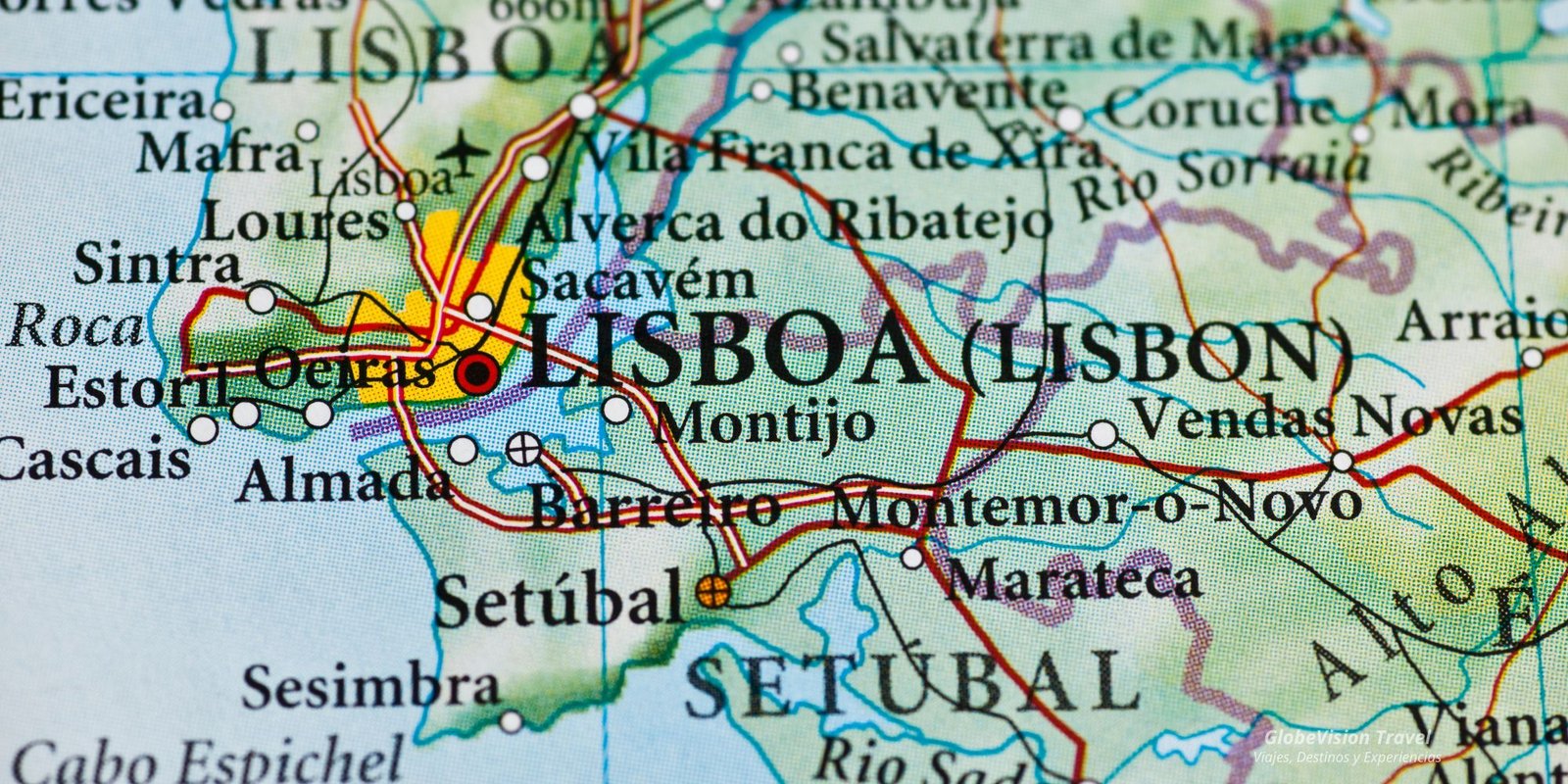
GlobeVision™ — Practical guide to organize Lisbon with judgment: how to get around without wasting time, choose the right area to stay, avoid common mistakes and plan realistic visits without ending up exhausted by hills, queues or poorly calculated transfers.
How should you organize an efficient trip to Lisbon?
The most efficient way to visit Lisbon is to group each day by area, stay near metro or useful transport, use the Viva Viagem or Navegante card, avoid relying on tram 28 during peak hours and always calculate the real elevation of each neighborhood. Lisbon looks compact on the map, but its hills, cobblestones and schedules can turn a short route into an exhausting day if you do not plan well.

Introduction
Lisbon is a beautiful, bright and apparently easy city to explore, but that first impression can be misleading. Its historic neighborhoods are full of charm, yes, but also hills, stairways, cobbled streets, crowded trams and routes that look simple on the map but feel much more tiring in practice.
Walking through Alfama, climbing toward São Jorge Castle, crossing Baixa, reaching Chiado or trying to fit Belém into one afternoon can seem easy when you look at Google Maps. The problem appears when you add heat, slopes, queues, packed transport and restaurants that close their kitchen earlier than expected.
Lisbon does not require the same broad logistics as a huge monumental capital, but it does require judgment. The key is not to see ten neighborhoods in two days, but to organize each day by area, calculate the real physical effort and avoid improvising when you are already tired.
This guide is designed to answer real questions when organizing a trip to Lisbon: how to get around without wasting time, where to stay depending on your profile, which areas to visit together, how to avoid tourist traps, which mistakes travelers often make and how to connect Lisbon with other Portugal cluster destinations such as Porto, Sintra, Algarve or Madeira.
Country context: before exploring Lisbon
Lisbon is an excellent base for starting a route through Portugal, but it should not be planned in isolation. If you are organizing a broader trip around the country, start with this strategic guide:
When to travel to Lisbon
Lisbon can be visited all year round, but the experience changes quite a lot depending on the season. The city has good light, mild weather and plenty of atmosphere, although in summer the hills, queues and heat can make the daily rhythm much harder.
| Season | Advantages | Drawbacks | Practical recommendation |
|---|---|---|---|
| March – May | Pleasant weather, good light and less heat | Easter can raise prices | Excellent for a first visit and walking routes |
| June – August | Lively atmosphere, long days and events | Heat, more tourists and expensive accommodation | Plan early and rest at midday |
| September – October | Good weather and less saturation than summer | Prices still high in central areas | Very good period to combine Lisbon and coast |
| November – February | Less tourism and lower prices | Occasional rain and shorter days | Ideal if you prioritize savings and calmer visits |
The most balanced months are usually April, May, September and October. They allow more walking, easier viewpoint visits and excursions such as Sintra or Cascais with less pressure. In July and August, Lisbon is still very attractive, but expectations should be adjusted: fewer long walking routes, more breaks and earlier visits.
How much does it cost to travel to Lisbon?
Lisbon is no longer as cheap as many travelers imagine. It is still more accessible than some major European capitals, but prices have risen significantly in accommodation, central restaurants and tourist experiences. The difference between an affordable visit and an expensive one usually depends on where you sleep, where you eat and how much you improvise your transfers.
| Travel style | Approximate daily budget | Includes | Main risk |
|---|---|---|---|
| Budget | €45-70 per person | Basic accommodation, simple food, public transport | Staying too far away and losing time in transfers |
| Mid-range | €80-140 per person | Well-located hotel, local restaurants, main monuments | Overspending in tourist areas |
| Comfortable | €150 or more per person | Central hotel, occasional taxis, better restaurants and excursions | Paying a lot for poorly chosen comfort |
The biggest budget mistake in Lisbon is looking only at the accommodation price. A cheap hotel in a poor location can force you to use more taxis, walk more than expected or lose time every day. In a city with so many hills, paying a little more for a practical location can be very worthwhile.
For tickets, guided experiences, Belém tours, Tagus River cruises or excursions to Sintra from Lisbon, you can compare options on GetYourGuide or Klook. You do not always need a tour, but when you have few days it can reduce queues, poorly calculated transport and last-minute decisions.
Best places to visit
Lisbon is made up of neighborhoods with very different personalities. Each area has its own rhythm and physical demand. The typical mistake is jumping from Alfama to Belém, then to Bairro Alto and then to Parque das Nações on the same day. On the map it looks possible; in practice it often ends in fatigue, waiting time and superficial visits.
| Area | What to see | Best moment | Logistical advice |
|---|---|---|---|
| Alfama / Castelo | Castle, viewpoints, historic alleys | Morning | Do it early and with comfortable shoes |
| Baixa / Chiado | Praça do Comércio, Santa Justa Lift, cafés and shops | Morning or afternoon | Practical area to connect neighborhoods |
| Bairro Alto | Bars, nightlife, nearby viewpoints | Afternoon-night | Not ideal for sleeping if you want silence |
| Belém | Jerónimos Monastery, Belém Tower, pastéis de nata | Weekday morning | Go early and avoid weekends if possible |
| Parque das Nações | Oceanário, riverside walk, modern district | Relaxed half day | Good option for families or a less physical day |
Alfama and Castelo
Alfama is the oldest neighborhood and one of the most photogenic areas of Lisbon. Its narrow streets, tiled façades, hanging laundry and viewpoints create a very special atmosphere. But it is also a demanding area: there are hills, stairways, cobblestones and streets where vehicles cannot always reach.
If you visit São Jorge Castle, it is best to go early. Heat and crowds increase quickly, especially in summer. Do not try to rush through Alfama: it works better if you walk slowly, accept a few detours and save energy for the rest of the day.
Baixa and Chiado
Baixa is the easiest area for orientation. It is flatter, well connected and allows you to walk to Praça do Comércio, Rua Augusta, Rossio and the Santa Justa Lift. Chiado, on the other hand, adds cultural atmosphere, cafés, shops and access toward Bairro Alto.
This area works very well as a base because it reduces friction. You can return to your accommodation to rest, connect with the metro or tram and reorganize the day without crossing half the city.
Bairro Alto
Bairro Alto changes completely depending on the time of day. During the day it can seem quiet, even a little sleepy. At night it fills with bars, noise and movement. It is an interesting area for going out, dinner or drinks, but it is not always the best choice for sleeping.
If you are a light sleeper, traveling with children or need proper rest, check the exact accommodation location very carefully. One street may be calm and the next one full until the early hours.
Belém
Belém deserves its own morning. Here you will find Jerónimos Monastery, Belém Tower, the Monument to the Discoveries and the famous pastéis de nata. The problem is that queues can be long, especially if you arrive late or on a weekend.
The most efficient practical decision is usually to leave early from Cais do Sodré and use the commuter train or direct transport. The tram may be picturesque, but it can also be slow and crowded.
Parque das Nações
Parque das Nações shows a modern, spacious and easier-to-walk side of Lisbon. The Oceanário, riverside walks and Oriente area make it a good option if you are traveling with children or need a less physically demanding day.
Do not mix it with Alfama or Belém on the same day unless you have plenty of margin. It is well connected, but far from the historic center.
Lisbon viewpoints
Lisbon is understood very well from its viewpoints. Senhora do Monte, Santa Luzia, Portas do Sol, Graça and Santa Catarina offer different perspectives of the city. The problem is that many fill up at sunset. If you want calmer photos, try going in the morning or mid-afternoon.
Realistic 3-day itinerary
- Day 1: Alfama and Castelo in the morning, Baixa and Chiado in the afternoon. Take breaks in cafés and avoid overloading the day with extra museums or viewpoints.
- Day 2: Belém early. Monastery, Belém Tower, riverside walk and pastéis de nata. In the afternoon, return calmly toward Cais do Sodré or Time Out Market.
- Day 3: Parque das Nações and Oceanário in the morning if you want a softer day, or viewpoints and Bairro Alto if you prefer historic atmosphere. Leave margin to repeat an area you liked.

How to get there
Most travelers arrive at Humberto Delgado Airport, located relatively close to the center. That proximity is a major advantage, but it does not mean that every transfer is equally comfortable. Getting to areas such as Baixa or Chiado can be simple; reaching Alfama with luggage, hills and narrow streets can be much more uncomfortable.
| Option | Approximate time | When it makes sense | Logistical risk |
|---|---|---|---|
| Metro | 30-45 min to the center | Light luggage and accommodation near a station | Transfers and stairs with suitcases |
| Taxi / apps | 20-35 min | Late arrivals or heavy luggage | Surcharges, traffic or an inconvenient drop-off point |
| Train | Variable | Connections to Sintra, Cascais, Porto or other cities | Busy stations during peak hours |
| Car | Not recommended in the center | Only for routes outside Lisbon | Parking, narrow streets and restricted areas |
The metro from the airport is useful if you travel light and your accommodation is well connected. The red line allows connections with other lines, but if you are staying in Alfama, Castelo or steep streets, the final stretch can be uncomfortable with luggage.
Lisbon has important stations such as Santa Apolónia, Oriente, Rossio and Cais do Sodré. Rossio is key for Sintra, Cais do Sodré for Cascais and Belém, Oriente for national connections and Santa Apolónia for trains toward the north.
A car inside Lisbon rarely makes sense. Parking is difficult, some streets are narrow, there are limited-access areas and traffic can be frustrating. If you want to explore Portugal by car, it is usually better to pick it up when leaving the city.
Before buying flights, check whether it makes sense to enter through Lisbon and leave from Porto, Faro or another city depending on your route. For open-jaw combinations you can compare options on Kiwi, especially if you want to avoid going back just to catch your return flight.
Where to stay
Choosing where to sleep in Lisbon has a major impact on the daily experience. Not all neighborhoods are equally practical, even if they all seem central. Elevation, noise, metro access and comfort with luggage matter more than it may seem.
| Area | Main advantage | Drawback | Who it suits |
|---|---|---|---|
| Baixa | Flat, central and well connected | More touristy and less local | First visit, families, practical trip |
| Chiado | Cultural atmosphere, restaurants, good location | Higher prices | Couples and travelers who want comfort |
| Alfama | Historic charm and traditional atmosphere | Hills, stairs and difficult access | Travelers without heavy luggage and with good mobility |
| Bairro Alto | Nightlife and bars | Noise until late | Travelers who prioritize going out at night |
| Avenida da Liberdade | Comfort, better hotels and transport | Less neighborhood charm | Comfortable trips, rest, mid/high-range hotels |
| Parque das Nações | Modern, spacious and comfortable area | Far from the historic center | Families, events, calmer trips |
For a first visit, Baixa and Chiado are usually the most balanced areas. If you want authenticity and do not mind hills, Alfama can be beautiful. If you want rest and comfort, Avenida da Liberdade works very well. If you travel with children or prefer a modern environment, Parque das Nações is practical, although less central.
Before booking, check three things: whether there is an elevator, whether the street has a steep slope and whether the accommodation is truly close to useful transport. In Lisbon, “800 meters from the center” can mean a very uncomfortable walk with suitcases.

Where to eat
Lisbon has an excellent food scene, but also many tourist traps. The difference between eating well and overpaying can be just one street. In very central areas, it is worth looking beyond photo menus, street promoters and terraces that are too tourist-oriented.
| Area | What to expect | Practical advice |
|---|---|---|
| Baixa / Chiado | Many tourist restaurants and some good local places | Avoid promoters and compare recent reviews |
| Alfama / Mouraria | Tascas, fado, traditional food | Confirm prices and couvert before ordering |
| Bairro Alto | Bars, informal dinners and nightlife | Do not arrive too late if you want a proper dinner |
| Time Out Market | Variety in one single space | Avoid peak hours if you do not want to eat among crowds |
| Parque das Nações | Spacious restaurants by the river | Good option for a quiet meal outside the center |
In Lisbon it is worth trying bacalhau, seasonal sardines, bifanas, caldo verde, pastéis de nata and fish dishes. But not every traditional-looking place is good and not every modern place is expensive. The trick is to check whether there is real customer turnover, clear prices and no pressure at the door.
Keep the “couvert” in mind: bread, butter, olives or other appetizers may arrive without being requested and are charged separately if you consume them. If you do not want them, say so at the beginning to avoid surprises on the bill.
Practical travel tips
- 1. Wear comfortable shoes with non-slip soles: Cobblestone streets can be slippery, especially when it rains. Bad footwear multiplies fatigue.
- 2. Organize your visits by area: Do not cross the city several times a day. Grouping nearby neighborhoods avoids wasted time.
- 3. Buy the Viva Viagem or Navegante card when you arrive: It allows you to use metro, bus, tram and some urban trains more easily.
- 4. Do not underestimate the slopes: A short route can be hard if it includes hills, stairways or cobbled streets.
- 5. Book tickets online for key monuments: In places such as Jerónimos Monastery or the Oceanário, you can save a lot of time.
- 6. Carry small cash: Although cards work in many places, some small shops, bakeries and old trams may require cash.
- 7. Avoid informal taxis: Use apps or official taxis, especially at the airport and stations.
- 8. Watch meal times: Many restaurants close their kitchen between services. Do not leave dinner too late if you have a specific place in mind.
- 9. Be careful with pickpockets: Trams, stations, viewpoints and crowded zones are sensitive points.
- 10. Use less famous viewpoints: Graça, Monte Agudo or Santa Catarina can be more pleasant than the most crowded ones depending on the time.
- 11. Do not rely only on map apps: They do not always calculate elevation, stairways or transport waiting times well.
- 12. If you visit Sintra from Lisbon, leave very early: Trains and palaces get crowded quickly. Ideally, leave before 8:00 and book tickets. To organize it better, review our guide to Sintra without logistical mistakes.
- 13. Do not put Belém and Sintra on the same day: It is too much for an efficient day. Better to separate both blocks.
- 14. If you continue toward Porto, do not rush the train: Leave margin to reach the station, especially if you depart from Santa Apolónia or Oriente.
- 15. Have mobile data from day one: For maps, digital tickets, reservations and transport changes, an eSIM can save a lot of friction. You can review options on Airalo.
Common mistakes and what not to do
- 1. Staying in Alfama without considering luggage: Many streets have stairways or limited access. Carrying suitcases can be exhausting.
- 2. Trying to see too many neighborhoods in one day: Lisbon looks compact, but elevation and necessary breaks slow the rhythm.
- 3. Not booking restaurants in high season: Popular places can have long waits, especially at night.
- 4. Taking tram 28 at tourist stops: Queues can be huge and pickpocket risk is higher. If you want the experience, use the end stops or unusual hours.
- 5. Not carrying cash for small purchases: Some traditional shops, bakeries or old trams may not accept cards.
- 6. Sleeping in Bairro Alto if you want peace: It is a nightlife area. It can be fun, but not always quiet.
- 7. Forgetting sun protection even outside summer: Lisbon has a lot of exposure in viewpoints and open squares.
- 8. Depending only on the metro: It does not reach every useful point. Sometimes bus, tram, train or walking works better.
- 9. Eating at the first restaurant next to an attraction: Prices can be high and quality uneven. Walk a few streets farther.
- 10. Not checking schedules on holidays: Some monuments, museums and restaurants change opening hours or close.
- 11. Combining Lisbon, Sintra and Cascais without margin: It is possible, but not advisable in only a few days. Each area deserves its own rhythm.
- 12. Thinking Lisbon is only “a quick weekend”: In two days you can see part of it, but three or four days allow you to enjoy it much better.
Safety and recommendations
Lisbon is generally a safe city for tourists, with low crime levels compared with other European capitals. The main risk lies in opportunistic petty theft, especially on trams, at stations, viewpoints and very crowded areas.
Baixa, Chiado, Avenida da Liberdade and most tourist areas are safe both during the day and at night, although it is wise to be more cautious in nightlife areas such as Bairro Alto when returning to your accommodation. If you keep your belongings under control and avoid displaying valuables unnecessarily, you can explore Lisbon calmly.
If you come from outside the European Union, are doing a long route through Portugal or combine Lisbon with Madeira, Algarve or several European countries, it is worth reviewing travel coverage before leaving. To compare medical insurance and assistance options, you can use VisitorsCoverage.
| Risk | Where it happens most | How to reduce it |
|---|---|---|
| Pickpockets | Tram 28, stations, viewpoints, Baixa | Closed bag, backpack in front and attention in crowds |
| Falls or slips | Cobbled streets and hills | Shoes with grip and no rushing when it rains |
| Night noise | Bairro Alto, Cais do Sodré | Check accommodation reviews before booking |
| Restaurant overcharges | Very touristy areas | Confirm couvert, prices and avoid promoters |
| Wasted time | Belém, Sintra, crowded trams | Go early, book ahead and do not overload the day |
- Avoid carrying your passport every day; a digital copy is enough while the original stays safe at the accommodation.
- In nightlife areas such as Bairro Alto, moderate alcohol consumption and plan your return.
- Be careful when crossing wide avenues: not all cars consistently respect pedestrian crossings.
- At viewpoints, hold cameras and phones carefully. There are railings, crowds and constant distractions.
- During popular events such as the Santo António festivities in June, plan exits and transfers in advance.
Frequently asked questions
- What is the best area to stay in Lisbon for a first visit?
Baixa and Chiado are usually the most practical areas for a first visit. They are well connected, allow you to walk to many points and reduce daily friction. Alfama is very beautiful, but less comfortable with luggage or limited mobility. - How many days do you need to see Lisbon properly?
Three full days allow you to see the essentials without rushing: Alfama, Baixa, Chiado, Belém and some viewpoints. With four or five days you can add Sintra, Cascais or a calmer day. - Is Lisbon dangerous for tourists?
It is not generally a dangerous city. The main problem is pickpockets in very busy areas and on tram 28. With basic precautions, the experience is usually safe and comfortable. - Should I rent a car in Lisbon?
Not for moving around the city. Traffic, parking, narrow streets and restricted areas make it impractical. A car only makes sense if you are doing a route outside Lisbon. - Is it easy to move around with children or older travelers?
It depends on the area. Baixa, Avenida da Liberdade and Parque das Nações are more comfortable. Alfama, Bairro Alto and some viewpoints can be difficult because of slopes and stairs. - Is tap water drinkable in Lisbon?
Yes, tap water in Lisbon is drinkable. You can refill bottles without problems in accommodation and many restaurants. - Is tram 28 worth it?
It can be a nice experience, but it is not always practical. During peak hours it is usually full and pickpocket risk is higher. If you want to do it, try boarding at the end stops and during less touristy hours. - Which day trip is better from Lisbon: Sintra or Cascais?
Sintra is more monumental and logistically demanding; Cascais is more relaxed and coastal. If you can only choose one, Sintra is usually more impressive, but it requires leaving early and planning well. - Is Lisbon expensive compared with Porto?
Lisbon is usually more expensive for accommodation and central restaurants. Porto can be somewhat more affordable, although it also has hills and areas where planning carefully is useful. - What should I do if I miss the last metro or bus?
There are night buses on some routes, but frequency is limited. The most practical option is to have transport apps installed and confirm your return route before going out at night.
Conclusion
Lisbon is a city that rewards curiosity, but also intelligent planning. Its distances deceive, its slopes demand effort and its authenticity is better enjoyed when you are not rushing from one neighborhood to another. Choosing where to stay well, grouping visits and understanding local rhythms makes the difference between an exhausting getaway and a genuinely pleasant trip.
The key is not to treat Lisbon as a flat city or as a list of isolated monuments. It works better by areas: Alfama and Castelo for an intense morning, Baixa and Chiado to connect the center, Belém for its own half day, Bairro Alto for nightlife and Parque das Nações for a more modern and relaxed Lisbon.
If after Lisbon you plan to continue through Portugal, you can apply the same strategic logic to destinations such as Porto, Sintra, Algarve or Madeira. Portugal is much more enjoyable when each stage has a clear logic and does not become a sum of improvisations.
🌍 More guides about Portugal
If Lisbon is part of a broader route, these guides help you connect your trip through Portugal with fewer backtracks, better bases and clearer decisions.
- Portugal: strategic guide to explore the country without improvising
- Porto without surprises: practical tips to explore the city and avoid mistakes
- Sintra: how to organize your visit and avoid logistical mistakes
- Algarve: strategic guide to organize your trip and avoid logistical mistakes
- Madeira: practical guide to organize the trip and avoid logistical mistakes