
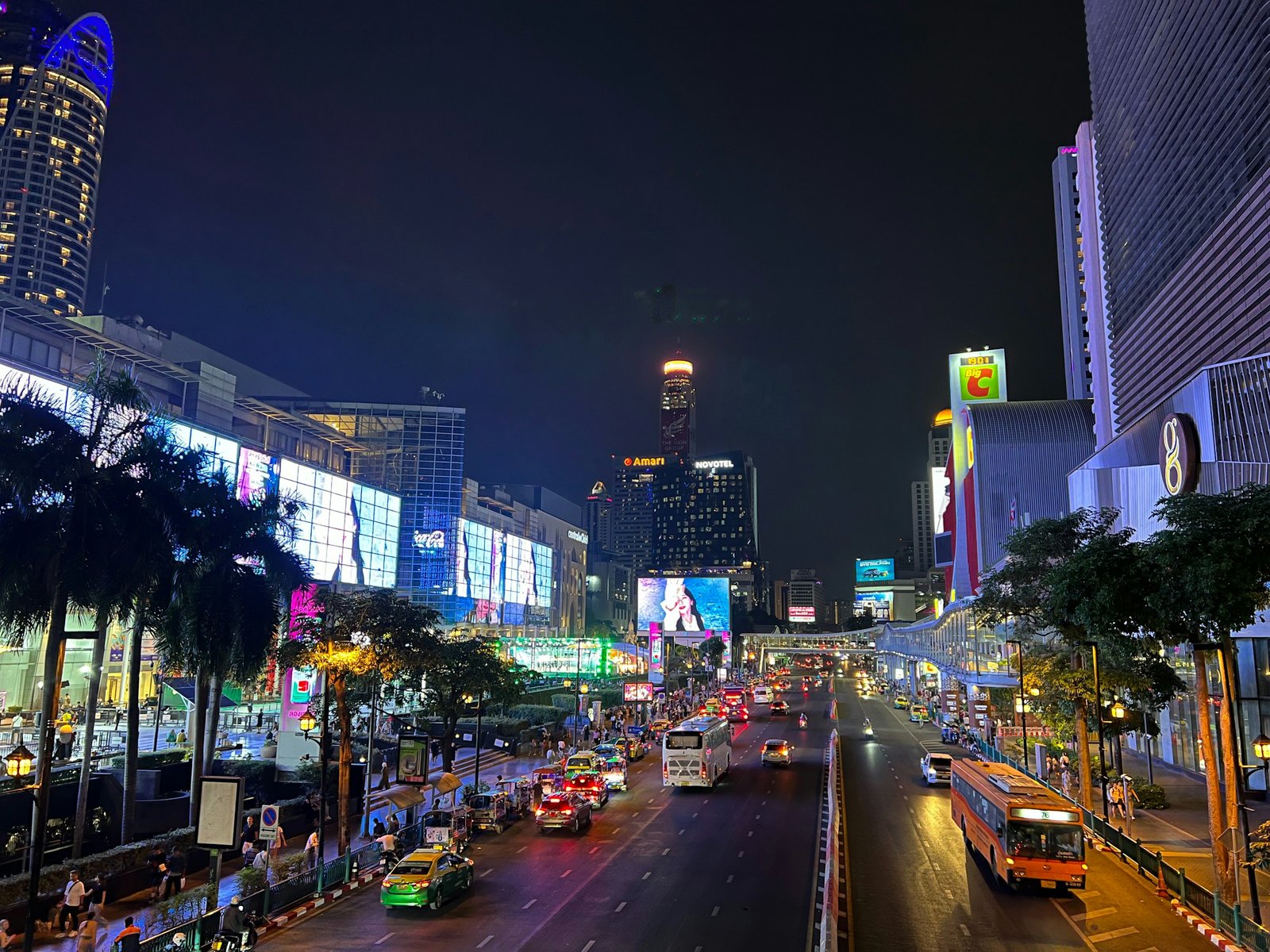
GlobeVision™ — A logistics-first guide to planning Bangkok with clarity: where to stay, how to move around, which areas to visit, what budget to expect, and which mistakes to avoid so you do not lose time, energy or money in Thailand’s capital.

How should you plan an efficient trip to Bangkok?
The smartest way to visit Bangkok is to divide the city by areas, stay close to BTS, MRT or the river, use public transport whenever possible and avoid relying on taxis during rush hour. In Bangkok, the traveler who wins is not the one who tries to see everything in one day, but the one who groups temples, markets, food and neighborhoods according to real distances, heat, rain and traffic.
- Introduction
- Bangkok Within a Thailand Route
- Strategic Map of Bangkok
- Best Places to Visit
- Realistic 3-Day Itinerary
- GlobeVision™ Planning
- How to Get There
- How to Get Around Bangkok
- Where to Stay
- Where to Eat
- Estimated Budget
- Practical Travel Tips
- Common Mistakes and What Not to Do
- Safety and Recommendations
- Frequently Asked Questions
- Conclusion
Introduction
Bangkok can fascinate and overwhelm you within the same hour. Tuk-tuks, golden temples, skyscrapers, night markets, huge shopping malls, street food, intense heat and unpredictable traffic all coexist in a city that is hard to understand if you approach it with a random list of places.
The most common mistake is treating Bangkok like a compact city. On the map, everything can look relatively accessible, but in practice traffic, humidity, transfers and distances between districts can turn a poorly planned day into a chain of waiting times. A short taxi ride can take 15 minutes or more than an hour depending on the time of day.
The key is to organize each day by area. The main temples work best when grouped around the Chao Phraya River and the historic district. Sukhumvit and Siam are convenient for shopping, modern transport and well-connected hotels. Chinatown deserves its own late afternoon and evening. Khao San and Rambuttri can be useful for a backpacker atmosphere, but they are not always the best base. Silom and Sathorn offer a good balance between transport, hotels and rest.
This guide is designed as a base article for planning Bangkok before building a wider Thailand route. That is why it does not depend on other internal articles: here you have the essential structure to decide where to sleep, how to move around, what to visit first, when to avoid taxis, how to eat well without unnecessary risk and which mistakes to prevent before they affect your trip.
Bangkok Within a Thailand Route
Bangkok should not be seen only as a stopover. For many travelers, it is the entry point, jet lag adjustment zone, first practical errands, useful shopping base and connection hub toward northern Thailand, the islands or domestic routes. Used well, it can improve the entire logistics of your trip; used badly, it can drain your energy before the journey really starts.
| If your trip continues to… | How to use Bangkok | Key decision | Mistake to avoid |
|---|---|---|---|
| Northern Thailand | Arrival base before flying or taking a train to Chiang Mai | Leave one buffer night if you arrive from Europe | Booking tight connections after a long-haul flight |
| Southern islands | Entry point before Phuket, Krabi, Koh Samui or Surat Thani | Confirm your departure airport: BKK or DMK | Buying domestic flights without checking the airport |
| Ayutthaya | Full-day excursion from Bangkok | Do not add it if you only have 2 days in the capital | Returning too late and losing the evening |
| First time in Asia | Adaptation city: SIM/eSIM, cash, transport and pace | Stay well connected and avoid overloading day one | Starting with too many outdoor visits in strong heat |
When you later create more Thailand articles, this page can work as the Bangkok pillar and naturally link to guides about Chiang Mai, Phuket, Krabi, islands, Ayutthaya, budgets, internal transport and frequent mistakes. For now, it is better not to link to pages that do not exist: internal authority is built better with real, clean and useful links.
Strategic Map of Bangkok
Bangkok works best if you divide it into five blocks: historic district and temples, Chao Phraya River, Siam-Sukhumvit, Silom-Sathorn and market areas such as Chinatown. Most planning mistakes come from mixing these blocks without considering traffic, heat, rain or available transport.
| Area | What it concentrates | Best time | Logistical risk |
|---|---|---|---|
| Historic district | Grand Palace, Wat Pho, temples and Khao San | Early morning | Heat, queues and limited direct BTS/MRT access |
| Chao Phraya River | Wat Arun, ferries, views and Riverside hotels | Morning or sunset | Confusing tourist boats with public boats |
| Siam | Shopping malls, MBK, Siam Paragon, BTS connections | Afternoon, rain or heat break | Weekend crowds |
| Sukhumvit | Hotels, BTS, restaurants, urban nightlife | Afternoon-evening | Heavy traffic and long distances |
| Silom / Sathorn | Lumpini, hotels, offices, BTS/MRT connections | Morning or night | Workday traffic during rush hours |
| Chinatown | Street food, markets, night atmosphere | Late afternoon-night | Crowds, heat and need for cash |
Best Places to Visit
Bangkok has enough attractions to fill a full week, but most travelers have 2 to 4 days. That is why prioritization matters. The main temples are better early in the morning; markets work better in the late afternoon or evening; shopping malls are useful when heat or rain make walking uncomfortable.
| Place | Recommended time | Best time of day | Practical advice |
|---|---|---|---|
| Grand Palace and Wat Phra Kaew | 1.5-2.5 hours | 08:30-10:30 | Arrive early and respect the dress code |
| Wat Pho | 60-90 min | Morning or early afternoon | Combine it on foot with the Grand Palace |
| Wat Arun | 45-75 min | Sunset or morning | Cross by local ferry from Tha Tien |
| Chinatown / Yaowarat | 2-3 hours | Night | Bring cash and do not go in a rush |
| Chatuchak Market | 3-4 hours | Morning | Works best on weekends; bring water and a clear plan |
| Siam / MBK / CentralWorld | 2-4 hours | Afternoon or rain | Useful for shopping, food and air conditioning |
| Lumpini Park | 45-90 min | Sunrise or sunset | Ideal for a pause and a slower rhythm |
Grand Palace and Wat Phra Kaew
The Grand Palace is Bangkok’s most iconic visit, but also one of the most demanding. Heat, organized groups, entry controls and the dress code make an early start important. Shoulders and knees must be covered; do not leave this to improvisation at the entrance.
If you only have one morning for temples, start here. Do not schedule a rigid timed activity immediately afterward: between entry, photos, heat and exit logistics, it is easy to take longer than expected.
Wat Pho and Wat Arun
Wat Pho, famous for the Reclining Buddha, combines very well with the Grand Palace because it is close. Wat Arun requires crossing the river, but the ferry is fast and inexpensive. Wat Arun is especially beautiful at sunset, although the steps can be steep and slippery if it has rained.
Chinatown
Chinatown is one of the best areas to eat and feel Bangkok’s rhythm. During the day it can feel chaotic, but after dark it becomes a huge food corridor. The experience improves if you go without a large backpack, with cash and with patience to walk among crowds.
Chatuchak Market
Chatuchak is enormous. Trying to see it all is a bad idea. Decide before you go what you want: clothes, crafts, decoration, food, souvenirs or simply atmosphere. On hot days, one morning here can be more tiring than a full afternoon of temples.
Siam, MBK and Shopping Malls
Bangkok’s malls are not only for shopping. They function as logistical shelters from heat, rain and fatigue. Food courts, bathrooms, air conditioning and BTS connections make Siam a very useful area in the middle of the trip.

Realistic 3-Day Itinerary
| Day | Recommended route | Goal | What to avoid |
|---|---|---|---|
| Day 1 | Grand Palace, Wat Pho, Wat Arun and a riverside walk | Essential temples without long jumps | Adding Chatuchak or Sukhumvit on the same day |
| Day 2 | Siam, MBK, Jim Thompson House, Lumpini and Silom | Combine modern city, shopping and a slower pause | Walking under the sun between distant areas |
| Day 3 | Chatuchak if it is the weekend, Chinatown at sunset and Khao San/Rambuttri | Markets, food and night atmosphere | Going to Chinatown too early or without cash |
If you only have two days, remove Chatuchak unless it fits your route perfectly. If you have four days, add a day trip to Ayutthaya or a slower day around canals, markets and less obvious neighborhoods.
GlobeVision™ Planning: How to Organize Bangkok Without Burning Out
Recommended Operational Plan
- ✅ Reserve the first day for temples and the river: start early and keep the afternoon flexible so you are not trapped by traffic.
- ✅ Group Siam, Silom and Lumpini: they work well as an urban day with air-conditioned breaks.
- ✅ Save Chinatown for the evening: during the day it loses part of its strength and the heat weighs more.
- ✅ Do not schedule airports too tightly: Bangkok can complicate any transfer if you plan it to the minute.
- ✅ Use Bangkok as a strategic base: practical shopping, eSIM, cash, climate adaptation and departure toward other areas of Thailand.
Book Key Activities Without Improvising
Tours and tickets
Bangkok has activities worth securing in advance: guided temple visits, Ayutthaya, floating markets, Chao Phraya cruises and food experiences. Booking ahead protects your schedule and helps you avoid expensive last-minute decisions.
How to Get There
Bangkok has two main airports: Suvarnabhumi (BKK), the major international airport, and Don Mueang (DMK), widely used by low-cost airlines and domestic flights. Choosing a flight without checking the airport can complicate your arrival or your connection to other areas of Thailand.
| Airport | Main use | Best connection | Logistical risk |
|---|---|---|---|
| Suvarnabhumi (BKK) | International flights | Airport Rail Link to Phaya Thai and connection with BTS/MRT | Slow taxi during rush hour |
| Don Mueang (DMK) | Low-cost and domestic flights | Bus, train or taxi depending on final area | Less convenient connection with some districts |
| Taxi / Grab | Arrivals with luggage or at night | Door to door | Traffic, tolls and unclear pricing |
| Public transport | Travelers with light luggage | Cheaper and more predictable | Transfers, stairs and last connection times |
If you are still comparing flights to Thailand, it is worth checking combinations through Bangkok, Phuket or Chiang Mai depending on your full route. To compare dates and airports, you can use Kiwi, especially if you want to enter through Bangkok and leave from another city in the country.
Important warning: avoid taxis without meters or unofficial transport inside the airport. If you use an official taxi, confirm tolls and destination. If you arrive tired after a long flight, a transfer with a clear price can avoid arguments and lost time.
How to Get Around Bangkok
Bangkok does not work well if you rely only on taxis. BTS Skytrain, MRT, public boats, Airport Rail Link and apps like Grab are usually more useful when combined strategically. A taxi can be useful at night or for specific routes, but during rush hour it can be the worst option.
| Transport | When it makes sense | Advantage | Risk |
|---|---|---|---|
| BTS Skytrain | Sukhumvit, Siam, Silom, Chatuchak | Fast, air-conditioned and avoids traffic | Does not cover the historic district well |
| MRT | Urban connections, Chinatown and mixed areas | Useful, modern and increasingly practical | May require transfers |
| Chao Phraya boat | Temples, river and Riverside | Avoids traffic and offers views | Routes, colors and stops can be confusing |
| Taxi / Grab | Night, luggage or poorly connected areas | Door to door | Traffic and variable prices |
| Tuk-tuk | Short rides and a one-time experience | Fun once | Expensive for what it offers and not very comfortable |
Mobile Data From Day One
eSIM
In Bangkok you will constantly use maps, Grab, translation, bookings, transport schedules and digital tickets. An eSIM or local SIM prevents dependence on public Wi-Fi and reduces transfer mistakes.
Where to Stay
Choosing accommodation in Bangkok is a critical logistics decision. It is not enough for the hotel to be attractive or cheap. It must be connected to BTS, MRT, the river or an area that matches your type of trip. Staying far away can look like a saving, but you pay for it in heat, taxis and lost time.
| Area | Main advantage | Drawback | Ideal profile |
|---|---|---|---|
| Sukhumvit | BTS, hotels, restaurants and urban life | Heavy traffic and very international atmosphere | Comfortable first visit with good connections |
| Siam | Shopping, BTS and central connection | Less traditional atmosphere | Practical travelers, shopping and families |
| Silom / Sathorn | Balance between transport, hotels and calm | More business-oriented atmosphere | Comfortable trips, couples and business travelers |
| Riverside | Views, good hotels and boats | More expensive and less agile for some areas | Couples, slower trips, mid/high budget |
| Khao San / Banglamphu | Low prices and backpacker atmosphere | Noise, weaker BTS/MRT connection | Backpackers and informal nightlife |
| Chinatown | Food, markets and local atmosphere | Chaos, noise and less rest | Urban and food-focused travelers |
For a balanced first visit, Sukhumvit, Silom or Siam usually work best. If you want a more scenic and calmer experience, Riverside is a very good option. Khao San can be cheap and lively, but it is not always convenient if you want to move efficiently across the whole city.

Where to Eat
Bangkok is one of the best cities in the world for food, but it is also a city where it is easy to choose badly if you rely only on tourist proximity. The key is to look for stalls with high turnover, restaurants with local customers and shopping mall food courts when you need a clean, fast, air-conditioned option.
| Area | What to expect | Practical advice |
|---|---|---|
| Chinatown / Yaowarat | Street food, seafood, soups, noodles | Go at night, bring cash and patience |
| Sukhumvit | International and Thai restaurants | Check taxes and service charges before ordering |
| Silom | Local food, office areas, markets and restaurants | Good area to eat without going too far |
| Food courts | Varied, clean and affordable food | Ideal in heat, rain or when short on time |
| Khao San / Rambuttri | Backpacker atmosphere and simple food | More social experience than culinary excellence |
If you do not tolerate spicy food, learn the phrase “mai phet”, meaning not spicy, although some dishes may still be intense. For street food, choose stalls with constant movement, freshly cooked food and clean utensils. Avoid food that has been exposed to heat for too long.
Estimated Budget
Bangkok can be cheap or expensive depending on how you use it. Accommodation, taxis, guided activities, rooftops and modern restaurants can raise the cost quickly. On the other hand, public transport, local food and food courts allow you to control the budget without sacrificing the experience.
| Profile | Approximate daily budget | Includes | Main risk |
|---|---|---|---|
| Low | 30-50 € | Hostel, street food, public transport, very selected visits | Staying poorly connected to save very little |
| Mid-range | 60-110 € | Decent hotel, varied restaurants, tickets and some comfortable transfers | Spending too much on taxis and tourist areas |
| Comfortable | 120 €+ | Well-located hotel, tours, rooftops, transfers and guided experiences | Relying on private transfers during rush hour |
Insurance and Medical Margin
Coverage
If you plan to combine Bangkok with islands, scooters, excursions, strong heat or domestic flights, clear medical coverage is worth having. It is not the flashiest expense, but it is one of the expenses that protects your trip the most if something goes wrong.
Practical Travel Tips
- Plan by areas: Do not mix temples, Chatuchak, Sukhumvit and Chinatown in the same day without a clear reason.
- Use BTS, MRT and boats whenever you can: You will avoid much of the traffic and have more predictable times.
- Do not underestimate the heat: Bangkok wears you down quickly; alternate outdoor visits with indoor breaks.
- Carry small cash: Many stalls, markets, bathrooms and transport options do not accept cards.
- Download offline maps: Useful if the signal drops or if a taxi driver does not understand the address well.
- Keep your hotel address in Thai: It helps a lot with drivers and emergency situations.
- Avoid taxis without a meter: Use Grab, Bolt or agree on the price before getting in.
- Wear appropriate clothing for temples: Shoulders and knees covered; avoid improvising at the entrance.
- Do not overload the first day: Jet lag, heat and traffic can affect you more than expected.
- Use shopping malls as logistics breaks: Air conditioning, bathrooms, food and transport in one place.
- Check market schedules: Chatuchak works best on weekends and some markets vary significantly by day.
- Do not leave your passport as a deposit: For rentals or services, a copy or deposit is safer when possible.
Common Mistakes and What Not to Do
- Trying to see everything in two days: Bangkok needs rhythm. Rushing only increases heat, traffic and frustration.
- Thinking taxis are always more comfortable: During rush hour they can be the slowest option.
- Staying far from BTS/MRT: A 15-minute walk in tropical humidity does not feel the same as it does on the map.
- Not checking temple dress codes: This can prevent entry or force you to buy emergency clothing.
- Falling for tuk-tuk scams: “The temple is closed” is a classic phrase used to take travelers to shops or tours.
- Depending on public Wi-Fi: You will need data for maps, taxis and translation.
- Not carrying cash: It is still essential in markets and for street food.
- Leaving important visits for the last day: Rain, traffic or fatigue can ruin the plan.
- Eating at stalls without turnover: Better to choose places with constant movement and freshly cooked food.
- Not calculating airport transfer time: Bangkok can double transfer times during rush hour.
Safety and Recommendations
Bangkok is generally safe for travelers, but it requires attention in crowded areas, transport, markets and tourist spots. The main risks are usually not serious, but they can be annoying: pickpockets, abusive taxis, small scams, heat exhaustion and lost time caused by bad information.
| Risk | Where it happens most | How to reduce it |
|---|---|---|
| Pickpockets | Markets, crowded BTS/MRT, Khao San, Chinatown | Wear your bag in front and protect important items |
| Transport scams | Temples, tourist areas, tuk-tuks | Confirm official hours and avoid suspicious offers |
| Heat exhaustion | Temples, markets and streets without shade | Water, breaks, hat and moderate pace |
| Traffic | Sukhumvit, airports, rush hour | Use BTS, MRT, boats and leave margin |
| Digestive problems | Exposed food or unsealed water | Choose stalls with turnover and drink sealed water |
Frequently Asked Questions
How many days do you need to visit Bangkok?
Three full days allow you to see the essentials without rushing too much: main temples, the river, Chinatown, Siam and a modern district. With four or five days, you can add Chatuchak, excursions or less touristy neighborhoods.
What is the best area to stay in Bangkok for a first visit?
Sukhumvit, Silom or Siam are usually the most practical areas because of BTS/MRT connections, hotel options and ease of movement. Khao San is cheaper, but less efficient for modern transport.
Is it better to use taxis or public transport in Bangkok?
For most routes, BTS, MRT and boats are more predictable. Taxi or Grab are useful at night, with luggage or for poorly connected areas, but they are not ideal during rush hour.
Is street food safe in Bangkok?
Yes, if you choose stalls with high turnover, freshly prepared food and local customers. Avoid food exposed to the sun for too long and always drink bottled or sealed water.
What is the best time to travel to Bangkok?
The dry season, between November and February, is usually the most comfortable. March to May can be very hot, and the rainy season requires more flexibility, although it can also bring better prices.
Do you need cash in Bangkok?
Yes. Although many hotels and restaurants accept cards, markets, street food, small transport options and public bathrooms often require Thai baht in cash.
Is Ayutthaya worth visiting from Bangkok?
Yes, if you have at least 3 or 4 days in the city. Ayutthaya works as a full-day excursion, but it is not worth adding if you only have two days for Bangkok.
Which mistakes can ruin a visit to Bangkok?
Staying far from transport, relying on taxis during rush hour, visiting temples late, not wearing appropriate clothing, underestimating the heat and trying to cover too many areas in one day.
Can Bangkok work as a base for planning a Thailand route?
Yes. Bangkok is a good entry point to adjust to the time zone, activate mobile data, withdraw cash, solve practical errands and connect with the north, the islands or nearby excursions such as Ayutthaya.
Conclusion
Bangkok rewards travelers who combine curiosity with strategy. It is intense, hot, vibrant and sometimes chaotic, but it becomes much more manageable when you understand its logic: move by areas, use public transport, avoid critical hours and do not confuse activity with real progress.
The difference between an exhausting visit and a memorable experience lies in small adjustments: sleep near a useful connection, start temples early, use boats along the river, save Chinatown for the evening, book key activities and leave real breaks so the heat does not collapse your plan.
If Bangkok is part of a Thailand route, use it as a strategic entry point, not just a stopover. From here you can connect with the north, the islands, Ayutthaya or wider routes across the country with much more clarity.
Continue Planning Thailand With Clarity
- Recommended next guide: Thailand itinerary for a first trip.
- Useful satellite guide: how to choose between Phuket, Krabi, Koh Samui and other islands.
- Future logistics guide: internal transport in Thailand, domestic flights, trains and ferries.