

- Operational Summary of Paris
- Quick Destination Keys
- Practical Data for Paris
- GlobeVision Indicators
- Introduction
- How to Structure a Trip to Paris Step by Step
- How to Get There
- Where to Stay
- Where to Eat
- Practical Travel Tips
- Common Mistakes and What Not to Do
- Safety and Recommendations
- Frequently Asked Questions
- Conclusion
GlobeVision™ — Paris: A Practical Guide to Optimizing Your Trip Step by Step
🧭 Operational Summary of Paris
🌍 Quick Destination Keys
📊 Practical Data for Paris
📊 GlobeVision™ Indicators
High
High
Medium
Medium
Introduction
Paris rarely goes wrong because it lacks interesting places. It usually goes wrong because of a bad sequence of decisions. Many people arrive with a list of landmarks, but without a real logic for their base, timing, bookings, and movement. The result is not just fatigue: it is also avoidable queues, unnecessary walking, poorly timed meals, and half a day lost in a pile of small frictions.
This guide is not meant to simply tell you what to see, but how to organize Paris step by step so the trip works better. Here, the structure of each day, the choice of your base, and the logic between areas matter more than generic attraction lists. The idea is simple: less pointless improvisation, more useful hours.
Think of this article as your operational manual before the trip. It does not give you a rigid itinerary, but an intelligent way to organize Paris so that whatever plan you build afterward — two days, three, four, or a bit more — performs much better.
How to Structure a Trip to Paris Step by Step
Step 1: Define your base. Before thinking about museums, decide where you will sleep and how you will enter and leave the city. In Paris, a bad base can cost you more time than a bad booking.
Step 2: Separate icons, walks, and transfers. Do not put everything “big” into the same block. Organize the trip by areas and by effort density. One major museum, one substantial walk, and one lighter closing block almost always work better than three heavy elements together.
Step 3: Book only what truly gets saturated. The Eiffel Tower, the Louvre, or Sainte-Chapelle can genuinely wreck your day if you improvise. Other elements allow more flexibility. Optimizing does not mean booking everything. It means protecting with reservations what will save you hours.
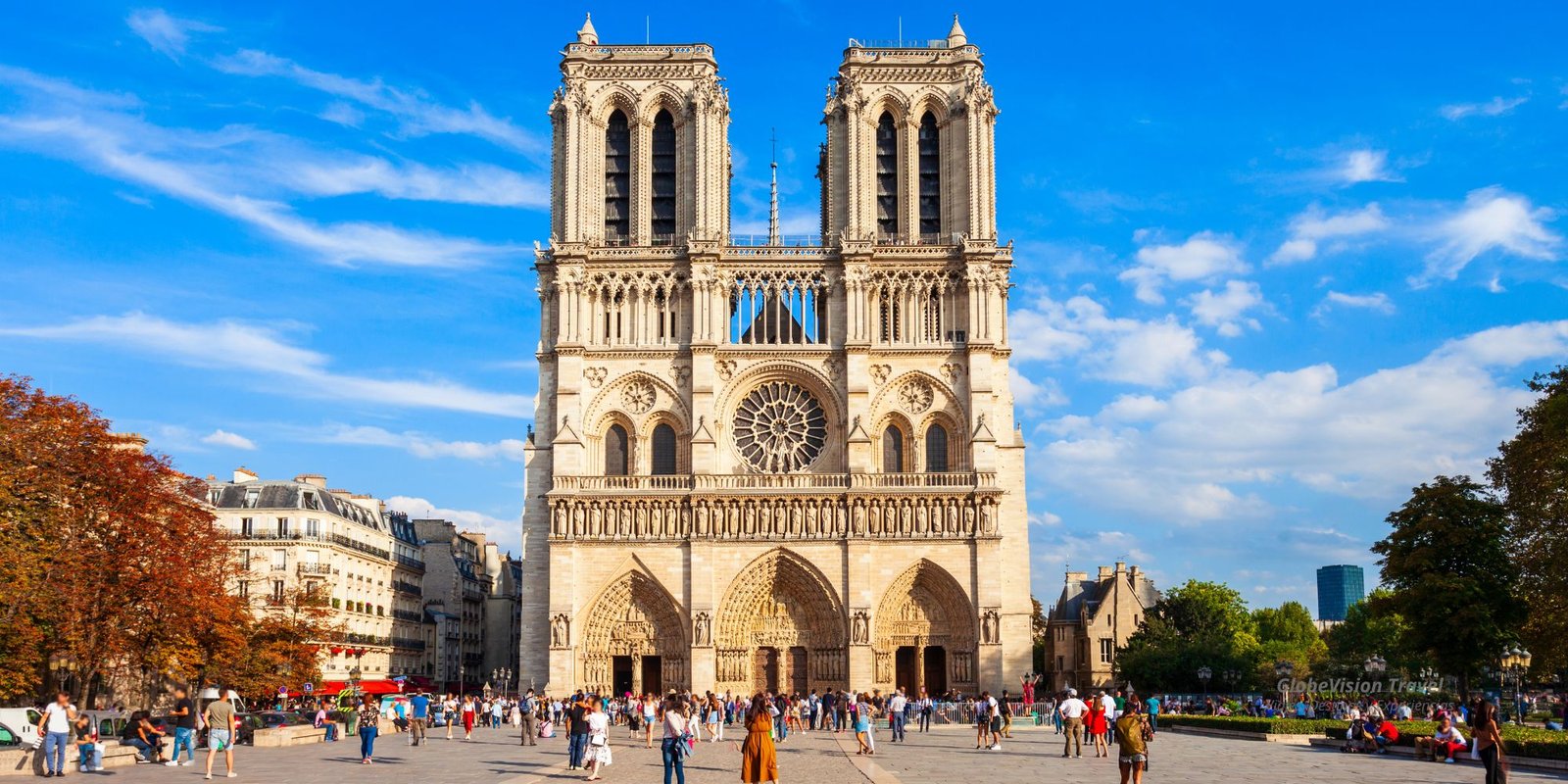
Step 4: Think in corridors, not isolated points. Paris works much better when you connect nearby areas and avoid pointless jumps from one end to the other on impulse. Île de la Cité, Le Marais, Saint-Germain, the Latin Quarter, Champs-Élysées, or Montmartre should not be treated as isolated names, but as territorial blocks.
Step 5: Leave space. Paris punishes over-ambition hard. If you overload the day, you do not see more. You just see things worse.

How to Get There
Getting into Paris matters much more than it seems. A clean arrival from the airport or station protects the first half of your day. A badly managed arrival, on the other hand, breaks the rhythm before you even begin.
From Charles de Gaulle, the RER B is often the basic benchmark. From Orly, the logic depends much more on your area and how it fits with your accommodation. Taxis or ride-hailing can make sense if you land very late, arrive exhausted, or your base is poorly served by public transport.
The important decision here is not only about cost or duration, but how much friction you add to your very first transfer. The best arrival is not always the cheapest one. It is the one that does not compromise the trip from minute one.

Where to Stay
The ideal base in Paris is not the most famous one, but the one that best fits your type of trip. For a first visit, areas such as Le Marais, Saint-Germain, or well-connected spots near Châtelet work especially well because they combine walkability with useful transport links. If your trip is short, paying a little more for a better-located base often clearly pays off.
Montmartre can be visually attractive, but it requires more elevation changes and more discipline in your routes. Other areas may have less postcard charm, but give you many more useful hours back. In Paris, the difference between a beautiful base and an operational base is felt every morning and every evening on the way back.

Where to Eat
Eating well in Paris does not mean turning every meal into an event. The best logic for an efficient trip is to reserve the full experience for where it truly matters and simplify where it does not. On days built around the Louvre, the Eiffel Tower, or long territorial blocks, a poorly timed meal can do more damage to the trip than an overrated attraction.
The practical rule is simple: quick breakfasts, lunches that do not break the schedule, and dinners with more flexibility once the day has already released some tension. Le Marais, Saint-Germain, the Latin Quarter, or some less obvious areas allow you to eat very well without getting trapped in slow terraces or absurd queues.

Practical Travel Tips
1) Book with exact times the places that get most saturated, but do not turn the whole trip into a rigid schedule.
2) Use the metro to protect your energy, not to complicate your life with unnecessary changes.
3) Adapt the day to the weather and move indoor blocks when needed.
4) Keep bookings, QR codes, and key addresses available offline.
5) Measure fatigue more carefully: in Paris, walking too much comes at a cost.
6) If a decision saves you 30 minutes and reduces friction, it is probably worth it.
7) The trip improves dramatically when you reduce repeated micro-mistakes.
Common Mistakes and What Not to Do
1) Trying to see everything at once.
2) Overloading one single day with too many heavy elements.
3) Booking too late for attractions that are highly sensitive to queues.
4) Improvising your base, arrival, and first block as if they were secondary.
5) Using taxis by inertia or the metro by obsession instead of using each mode where it actually works best.
6) Always eating at the first visible option.
7) Underestimating basic safety, the weather, or cumulative fatigue.
Paris does not become complicated on its own. It becomes complicated when you force the wrong logic onto it.

Safety and Recommendations
Practical safety in Paris depends more on judgment than on drama. Keep your phone and wallet secure in denser areas, do not stretch evening returns unnecessarily, and use well-lit axes if you are heading back late. If the weather changes or the day is already too loaded, simplify.
A good trip to Paris is not the one that squeezes every minute until it breaks, but the one that keeps enough margin so you do not make bad decisions when you are most tired.

Frequently Asked Questions
What is the best time of year to visit Paris?
Spring and autumn usually offer the best balance of weather, useful light, and tourist density. Summer can be heavier in terms of queues and pace. Winter may offer better prices, but with fewer daylight hours.
Do I need to speak French to travel to Paris?
It is not essential, but a few basic phrases help reduce friction in quick interactions and improve the tone of the trip much more than people expect.
How does public transport work in Paris?
It is a very dense and useful network. The key is not mastering all of it, but understanding a few strong lines, the main hubs, and avoiding routes with too many changes.
How much do tickets to the main museums cost?
That depends on the cultural blocks you want to build. More than memorizing prices, it is smarter to understand whether, for your real travel rhythm, a pass makes sense or individual tickets work better.
Is it safe to walk around Paris at night?
In many central areas, yes. But it is better to stick to well-lit axes, avoid stretching the end of the day unnecessarily, and simplify returns when you are already tired.
Where should I buy Eiffel Tower tickets?
Always through official channels and with enough lead time. Improvising the Eiffel Tower often means queues, poor availability, or pointless frustration.
Can you drink tap water in Paris?
Yes. Carrying a reusable bottle makes a lot of sense in a city where you will walk a great deal and where buying water on impulse over and over again makes little sense.
Which neighborhoods are best for staying in Paris?
Le Marais, Saint-Germain, and well-connected bases work very well for a first visit. What matters is the logic of the trip, not just the prestige of the neighborhood.
Do I need to leave a tip in restaurants?
Not as an obligation. A small rounding-up or a gesture if the service was good fits perfectly within local practice.
How many days are recommended to get to know Paris?
With 2–4 days you can build a very solid trip if you organize the city well. What matters is not only the number of days, but the order of your decisions.
GlobeVision™ — A Strategic Travel Guide System
Analyze destinations from a territorial, logistical, and operational perspective to make more efficient travel decisions. In high-cost destinations, optimizing decisions can save dozens or even hundreds of euros during the trip.
See travel strategies on GlobeVision
Destination Strategic Map
- Destination: Paris
- Country: France
- Guide type: Practical guide and trip optimization
This article is part of the GlobeVision™ editorial system, designed to analyze destinations from a logistical, territorial, and strategic perspective.
🧭 Explore More Articles from the Paris Cluster

Conclusion
Paris performs much better when you properly organize your base, bookings, pace, and movement. The city does not need you to squeeze it. It needs you to structure it well. That is the difference between a trip that feels clumsy and one that truly flows.
With this logic, you do not visit Paris blindly. You organize it step by step, reduce friction, and turn each day into something lighter, more useful, and far better used.