
GlobeVision™ — How to visit Verona by car without wasting time, money or risking ZTL fines

GlobeVision™ Strategic Index
Operational Summary of Verona
1 day for the essentials; 2 nights if you want Verona without rushing and with logistics margin.
Medium-high: central hotels, Arena events, parking and restaurants raise the budget.
Medium-high if you arrive by car because of ZTL zones, perimeter parking and historic streets.
Urban escape, northern Italy route, base between Milan, Lake Garda and Venice.
GlobeVision™ Indicators
Destination Snapshot
Introduction
The most important decision when arriving in Verona by car is not whether you can drive into the centre. It is knowing when to park outside, avoid the ZTL and move on foot without carrying that mistake through the whole stay.
Verona looks easy: a compact centre, a clear train station, the Arena as a visual reference and many walkable areas. But if you arrive by car, with luggage, late at night, during opera season or with accommodation inside the historic core, the visit can become complicated quickly. Verona’s ZTL, perimeter parking, access roads, stone streets and the real distance from Porta Nuova matter more than they first appear.
This guide is built around one practical decision: drive into Verona or park outside to avoid ZTL fines. It is not only about where to leave the vehicle. It is about choosing a base that reduces friction, understanding which areas are comfortable with luggage, knowing when paid parking is worth it and avoiding the classic mistake of following GPS into a restricted access camera.
If Verona is part of a wider Italy itinerary, place it inside a larger strategy before adding cities, nights and transfers. Our Italy destinations and places page is useful if you are combining Verona with other northern bases, trains, a rental car or an arrival through Milan or Venice.
Verona practical data
Best with perimeter parking or accommodation with clear ZTL access instructions.
Verona Porta Nuova, roughly 20-25 minutes on foot from Piazza Bra.
Piazza Bra and the Arena concentrate visits, events and night-time exit peaks.
Walkable radius of Piazza Bra, Corso Cavour or Castelvecchio.
Medium-high if you sleep centrally, eat in the old town or visit during major events.
Following GPS into the ZTL without hotel confirmation.
Quick decision: drive in or park outside Verona?
| Your situation | Best decision | Risk if you improvise |
|---|---|---|
| You arrive by car and sleep inside the old town | Ask the hotel if it manages ZTL authorization and request the exact access route. | Automatic camera fine or unnecessary loops with luggage. |
| You arrive late or tired | Park on the perimeter and walk or take a short taxi to the accommodation. | Wrong entry because of stress, GPS or restricted streets. |
| You only stay one night | Choose a base near Piazza Bra, Castelvecchio or Corso Cavour. | Losing too much time between parking, check-in and sightseeing. |
| You will do train day trips | Stay near Porta Nuova or on the axis between station and centre. | Crossing the city every morning with little margin. |
| You travel during opera season | Avoid depending on taxis exactly when Arena events end. | Long waits, saturated streets and an uncomfortable return. |
Destination logic
Verona works through three main pieces. The first is the historic centre, where you find the Arena, Piazza Bra, Via Mazzini, Piazza delle Erbe, Castelvecchio and Ponte Pietra. It is compact, beautiful and walkable, but not always comfortable with luggage, a car or tight timing. Stone streets, tourist flows and events change the experience.
The second piece is Verona Porta Nuova, the main railway station. It is close enough to be useful, but not so close that you should ignore the walk. With luggage, heat or rain, the 20-25 minutes to Piazza Bra feel longer. If you will use trains to Venice, Padua, Lake Garda or Milan, sleeping near the station can make more sense than paying for a hypercentral address.
The third piece is car access. Verona is not an impossible city to drive into, but the historic centre should not be treated as a place where you simply “drive in and find a spot”. Decide before arrival: perimeter parking, hotel parking, hotel-managed ZTL authorization or final stretch on foot/taxi.

ZTL and parking in Verona
The ZTL is the most sensitive point if you arrive by car. The common mistake is not bad driving; it is trusting the GPS too much. Many apps prioritize the most direct route to the hotel or centre, but they may not interpret local restrictions, access hours, cameras or temporary permits correctly. If your accommodation is inside a restricted area, you need specific hotel instructions, not just an address.
If you do not have clear authorization, the smartest move is usually to park outside the historic core and complete the final stretch on foot or by short taxi. It may feel less convenient at first, but it prevents fines, stress and traffic loops. In Verona, paying for reasonable perimeter parking can be cheaper than a poorly managed ZTL entry.
ZTL and parking in Verona: practical comparison
| Option | When it works | Advantage | Watch out for |
|---|---|---|---|
| Perimeter parking | Short visits or hotels near the centre | Avoids restricted streets and simplifies arrival. | Check the real distance to your hotel with luggage. |
| Accommodation with parking | When arriving by car and not moving it during the stay | Reduces check-in and departure friction. | Ask for ZTL instructions in writing before arrival. |
| Hotel ZTL authorization | Only if the hotel confirms plate, timing and exact route | Allows luggage drop-off nearby. | Do not improvise a different entrance. |
| Driving in just to unload | Rarely worth it without prior confirmation | May seem quick. | A camera can turn it into an automatic fine. |
| Parking near the station | Train day trips or early departure | Better connection with Porta Nuova. | You stay farther from the historic core. |
If you are building a road trip through Italy and Verona is only one stage, read our guide to Italy itinerary mistakes. Verona usually fails when it is combined with too many cities, too little margin and last-minute car decisions.
How to get to Verona
Verona is well connected by train, car and airport. From Valerio Catullo Airport, the Aerobus to Porta Nuova is practical if you travel light. If you arrive late, carry heavy luggage or travel in a group, a taxi or transfer can be worth it. From Milan, Venice, Bologna or Padua, the train is often easier than the car if you only plan to visit the city centre.
If you arrive by road, the goal should not be “drive to the Arena”. The goal is to reach a logical point where you can leave the car and close the final stretch safely. On northern Italy routes, Verona fits well between Milan, Lake Garda, Lake Como and Venice, but its historic centre works better on foot than on four wheels.
How to get to Verona depending on your route
| Origin or situation | Recommended option | Smart decision |
|---|---|---|
| Milan | Train or car depending on the wider route | Train if you only visit the city; car if you continue toward lakes or mountains. |
| Venice | Direct train to Porta Nuova | Avoid moving the car if you do not need it for the next stage. |
| Lake Garda | Car or train + bus combination | Check timetables if you depend on regional buses. |
| VRN Airport | Aerobus, taxi or transfer | Taxi makes more sense with luggage, late arrival or 3-4 people. |
| Northern Italy road trip | Perimeter parking + centre on foot | Do not use the Arena as your GPS arrival point. |
To compare flights to Verona, Milan, Venice or Bologna, check options on Kiwi. In this kind of route, do not look only at the flight price. Arrival time and airport choice can completely change the first night, car rental and entry logic into Verona.
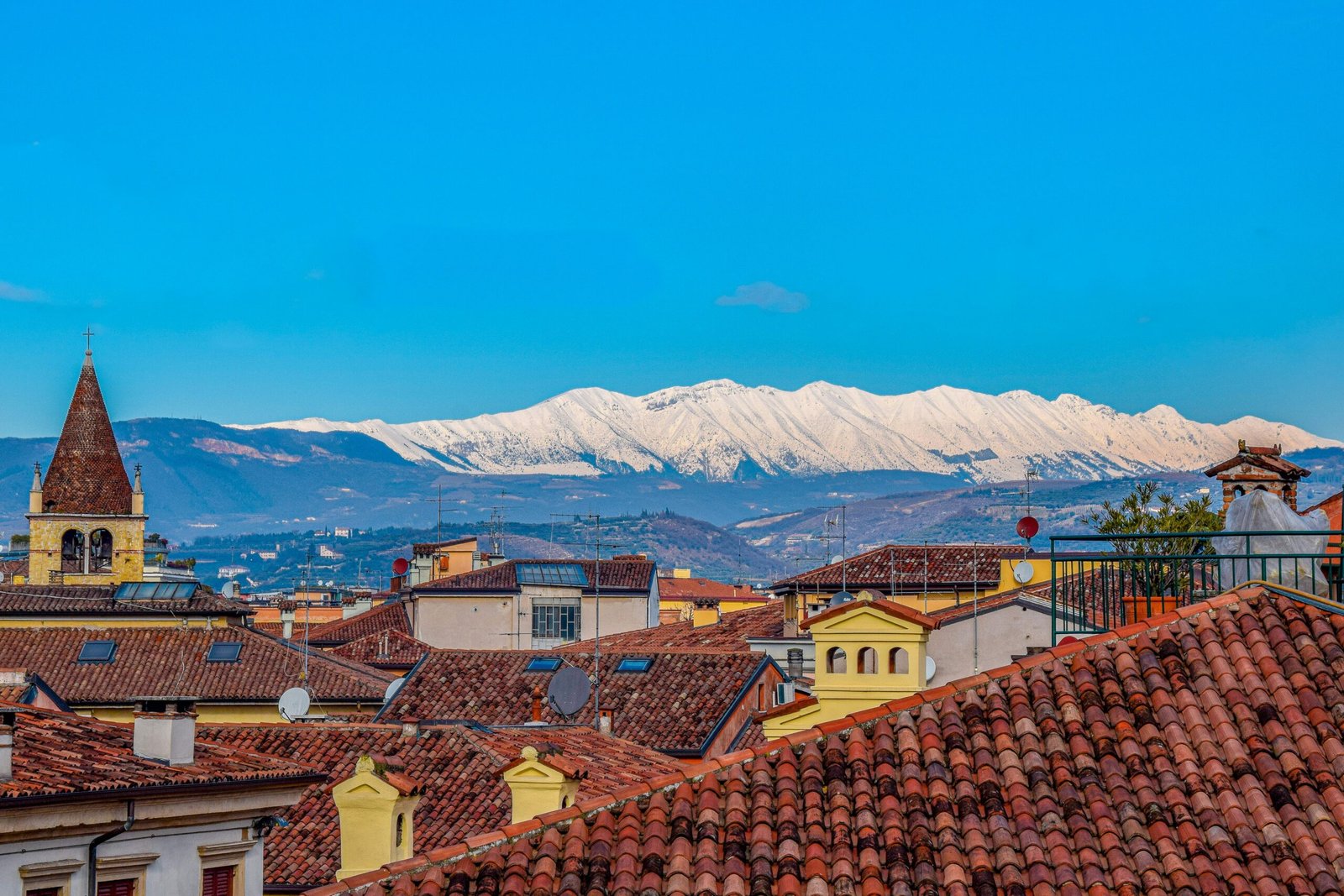
Where to stay
The best area to stay in Verona depends on how you move. If you are coming for one or two nights and want to focus on the centre, a base near Piazza Bra, Via Mazzini, Castelvecchio or Corso Cavour saves time and energy. If your priority is train day trips, Porta Nuova can be more practical even if it has less charm.
If you arrive by car, the ideal area is not always the prettiest one. It is the area that combines clear access, parking, walkable distance and low luggage friction. For a short stay, paying slightly more for a convenient location can save transfers, taxis and fatigue. For a longer road trip, a more functional base may be better than pushing the car into the old centre.
Where to stay in Verona by trip type
| Area | Best for | Advantage | Not ideal if… |
|---|---|---|---|
| Piazza Bra / Arena | First visit, theatre, opera, short stay | Everything is very close on foot. | You want to avoid noise, higher prices or tourist flow. |
| Corso Cavour / Castelvecchio | Good balance between centre and access | More comfortable for taxis, luggage and night returns. | You want to sleep in the exact monumental core. |
| Porta Nuova | Train day trips, early departure, tighter budget | Simpler rail logistics. | You want to step out of the hotel directly into the old town. |
| Duomo / Ponte Pietra | Romantic atmosphere and riverside walks | Beautiful, quieter and characterful. | You arrive by car, carry large luggage or have reduced mobility. |
| Veronetta | Lower budget and younger atmosphere | More competitive prices and local life. | You do not want to cross bridges at night or in rain. |
When booking accommodation in Verona, prioritize practical filters before pretty photos: parking, real distance to Piazza Bra, late reception, elevator, luggage storage and cancellation terms. In trips that combine car, trains and tickets, a flexible booking can be worth more than a small discount. If you compare hotels through platforms, always check whether parking is private, nearby or merely “available in the area”.
How to choose where to stay
If you stay one night and your priority is the Arena, choose accommodation within a reasonable radius of Piazza Bra or Castelvecchio. On such a short stay, saving 20 minutes each way matters more than paying a little more. If you arrive late, avoid overly internal streets with narrow access or confusing check-in.
If you plan train day trips, especially to Venice, Padua, Lake Garda or Milan, a base near Porta Nuova can make sense. The city will still be walkable, but your mornings will be cleaner. If you are on a car route, prioritize confirmed parking or perimeter areas. The worst scenario is discovering on arrival that “nearby parking” means finding a space on your own.
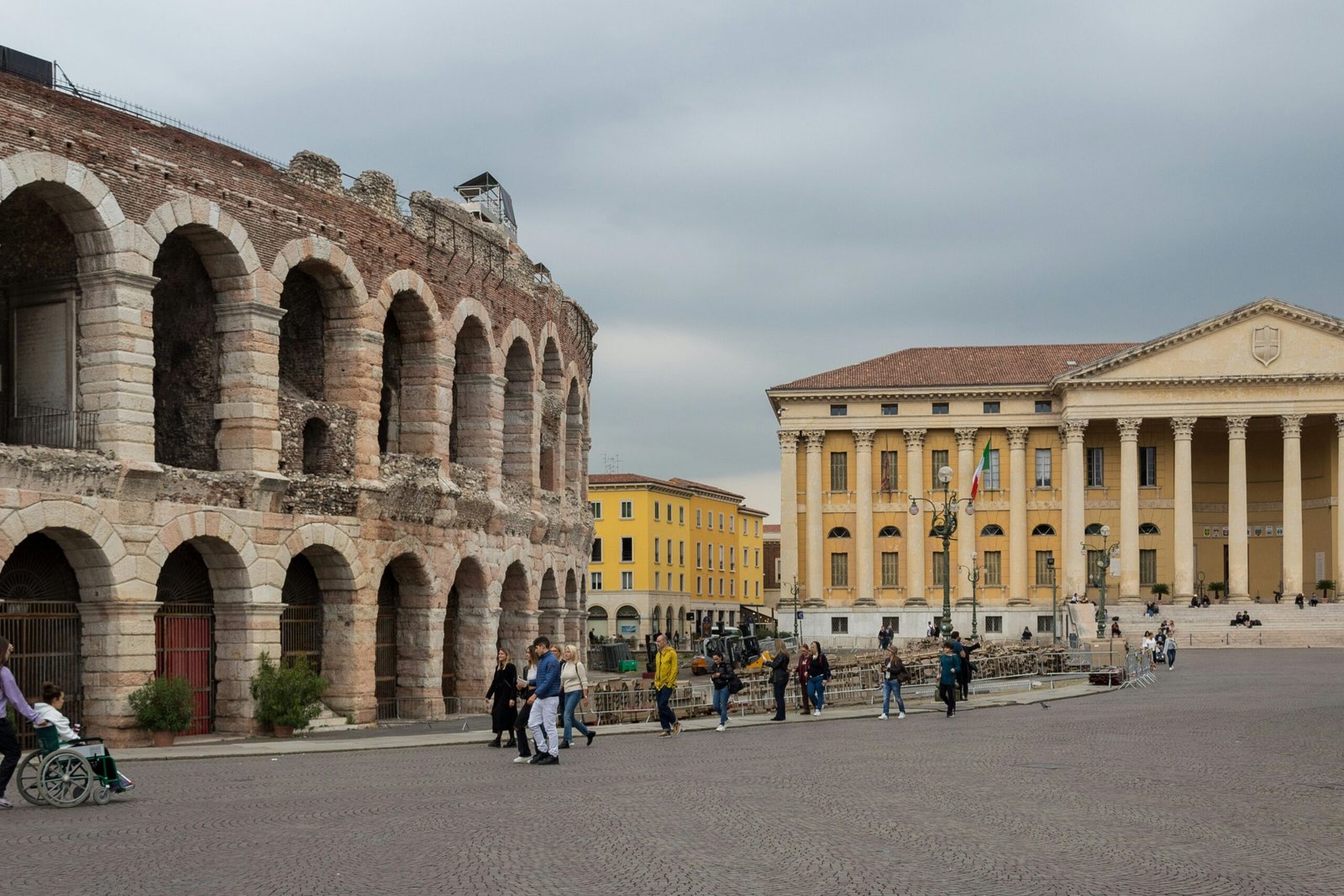
If you travel during opera season or major Arena events, think about the night exit. Piazza Bra can saturate when a performance ends. Sleeping 8-12 minutes away on foot through Corso Cavour or Castelvecchio may be more comfortable than depending on taxis at the exact moment everyone needs them.
Recommended Verona base by traveller profile
| Travel profile | Recommended area | Why it works |
|---|---|---|
| Couple on a short escape | Piazza Bra / Castelvecchio | Dinner, walking and return without transport. |
| Northern Italy road trip | Corso Cavour / perimeter with parking | Reduces ZTL risk and simplifies arrival/departure. |
| Daily train trips | Porta Nuova or intermediate axis | Avoids crossing the city every morning. |
| Family with luggage or stroller | Wider streets near Castelvecchio | Fewer cobbles, bridges and awkward surfaces. |
| Tighter budget | Veronetta or well-connected station area | Better prices if you accept more walking. |
Plan Verona with fewer mistakes
Do you want to plan Verona without improvising?
If you are combining Verona with a car, trains, Lake Garda, Milan or Venice, the risk is not only what to see. It is choosing the wrong base, parking, timing and route order. The GlobeVision Trip Decision Assistant helps you organize those decisions before booking.
This block is especially useful if Verona is one stage inside a longer route. On northern Italy trips, a bad decision on day one, such as the wrong airport, unnecessary car, hotel too far from the station or poor parking choice, can create cost and fatigue for the whole week.
Practical travel tips
Arrive with an access strategy, not just an address. Before driving toward Verona, decide where you will leave the car, whether the hotel manages ZTL access and how far you will walk with luggage.
Book key tickets in advance. If you visit the Arena or travel during opera season, advance booking can save queues and awkward rescheduling. For tickets, guided visits or experiences in Verona, compare options on Tiqets, GetYourGuide or Klook. The booked time must fit your real arrival, not an optimistic schedule.
Do not plan Verona as if everything were five minutes away. The centre is compact, but cobbles, crowds, bridges and event exits change timings. Add margin if you carry luggage, if it rains, if you travel with children or if you depend on trains.
Download maps, reservations and tickets. An eSIM can be useful if you come from outside the European Union or depend on your phone for maps, trains, parking and entry codes. Check options on Airalo. In Verona, losing connection exactly when looking for parking or opening a booking can turn a simple arrival into wasted time.
Operational tips for Verona
| Moment | What to do | Why it matters |
|---|---|---|
| Before arrival | Confirm parking, ZTL and access route. | Avoids fines and luggage loops. |
| First day | Leave the car and move on foot. | The centre is better experienced walking. |
| Arena events | Plan a walkable return or alternative taxi point. | Reduces waits after crowds exit. |
| Rainy days | Prioritize internal streets and more regular surfaces. | Reduces slips and riverfront delays. |
| Train day trips | Reach Porta Nuova with 12-15 minutes of margin. | Platform changes and passenger flow can be slow. |
Common mistakes and what not to do
Do not follow GPS into the centre without checking ZTL. It is the most expensive and easiest mistake to avoid. If the hotel has not confirmed authorization and exact route, do not enter. Parking outside and walking a few minutes is usually smarter than trying to unload quickly.
Do not choose accommodation only because it is “central”. In Verona, a beautiful street can be uncomfortable with luggage, car or rain. Check elevator, reception, parking, taxi/parking distance and pavement.
Do not add too many day trips from Verona without margin. Venice, Lake Garda, Padua, Vicenza or Milan can look easy by train, but every outing consumes energy. If Verona is your base, organize realistic days and leave time to enjoy the city.
Do not depend on a taxi exactly when an Arena event ends. When thousands of people leave at the same time, requesting a taxi from the obvious point can be slow and expensive. Walking a few minutes toward a clearer axis can save time and stress.
Do not take the car into the centre for apparent convenience. In cities like Verona, the car can turn from advantage to problem in minutes. Use it to arrive, leave or connect stages, not to move inside the historic core.
Common Verona mistakes and how to avoid them
| Mistake | Consequence | Practical solution |
|---|---|---|
| Driving into the centre following GPS | ZTL fine risk | Use perimeter parking or hotel instructions. |
| Sleeping far away to save little | More taxis, fatigue and lost time | Compare total cost, not only hotel price. |
| Not booking the Arena in peak season | Queues, bad times or no availability | Buy tickets with realistic arrival margin. |
| Planning trains with 5 minutes of margin | Risk of missing connections | Block 12-15 minutes at Porta Nuova. |
| Dragging luggage through cobbled areas | Fatigue, delays and poor experience | Choose access route, short taxi or luggage storage. |
Safety recommendations
Verona is generally comfortable and safe, but practical safety here has more to do with the physical environment than fear. Cobbles, rain, night exits, event crowds and heavy luggage can create more problems than the city itself. Wear stable shoes and avoid narrow or poorly lit routes if returning late.
If you travel with a rental car, non-refundable hotels, tickets and several transport stages, it is worth considering suitable travel insurance. It is not the most exciting part of the trip, but it can help with delays, cancellations, medical issues or route changes. You can compare options on VisitorsCoverage, especially if you come from outside Europe or combine several destinations.
In busy areas such as Piazza Bra, Via Mazzini or Arena exits, keep your bag and phone controlled. No paranoia is needed; just basic routine: closed zipper, phone not exposed in a back pocket and main routes at night. If it rains, avoid exposed river edges and prioritize more regular pavement.
Frequently asked questions
Should I drive into Verona city centre?
Only if your accommodation clearly confirms ZTL authorization, plate registration, permitted hours and the exact access route. If you do not have that information, the safest option is to park in a perimeter car park and complete the last stretch on foot or by short taxi.
Where should I park to visit Verona without ZTL fines?
The most practical solution is usually to use perimeter car parks near the centre or access axes such as Castelvecchio, Cittadella, Arena or Porta Nuova, depending on availability and your accommodation. The key is not to search for parking inside the old town without confirming restrictions.
What is the best area to stay if I only have one night in Verona?
For one night, prioritize a walkable radius around Piazza Bra, the Arena, Castelvecchio or Corso Cavour. That location reduces transfers, makes dinner easier and lets you return on foot without depending on saturated taxis or night buses.
If I plan train day trips, should I stay near Porta Nuova?
Yes, especially if you will take two or more train trips. Sleeping near Porta Nuova simplifies early departures and reduces the risk of crossing the city with little margin. You lose some charm compared with the old town, but gain logistics efficiency.
How do I avoid fines for entering the historic centre ZTL?
Before arrival, ask your accommodation whether it can register your plate and which streets you must use. Do not improvise another entrance or blindly follow GPS. If you do not have confirmed authorization, park outside the ZTL and do not enter just to unload.
Should I buy Arena di Verona tickets in advance?
In high season, weekends, major events and opera season, yes. Booking ahead helps you avoid queues, choose a better time and keep the day rhythm without reorganizing visits because of limited availability.
Is walking enough in Verona or do I need public transport?
For the historic centre, walking is usually enough. Public transport or taxis are more useful for connecting Porta Nuova with the centre, arriving with luggage, returning after events or moving in rain, strong heat or reduced mobility.
How much margin should I allow at Verona Porta Nuova?
With luggage or at busy times, allow 12-15 minutes for platform changes, ticket checks, screens or small internal delays. Assuming only five minutes is often risky.
What should I do if it rains and I planned to cross toward Ponte Pietra?
Recalibrate the route toward interior streets, more regular surfaces and covered areas. Leave river crossings for rain-free windows, wear shoes with good grip and protect phone, tickets and reservations. Verona is still visitable, but the rhythm changes.
Explore related Northern Italy guides


GlobeVision™ — Strategic travel guide system
We analyze destinations from a territorial, logistical and operational perspective. In cities like Verona, choosing parking, accommodation area, access and timing well can prevent fines, wasted time and unnecessary costs.
See GlobeVision travel strategiesGlobeVision™ Strategic Map
- Destination: Verona
- Region: Veneto
- Country: Italy
- Guide type: Logistics guide, car access, ZTL, parking and strategic accommodation
- Connects with: Milan, Lake Como, Lake Garda, Venice and Northern Italy routes
This article is part of the GlobeVision™ editorial system, designed to analyze destinations from a logistical, territorial and strategic perspective.
Conclusion
Verona works very well when you arrive with a clear decision: where to leave the car, which area to use as a base and how to move without entering the ZTL by mistake. If your trip is short, prioritize walkable accommodation near Piazza Bra, Castelvecchio or Corso Cavour. If you will do train day trips, Porta Nuova becomes more valuable. If you arrive by car, perimeter parking or a hotel with precise ZTL instructions can save more than any apparently cheap accommodation deal.
The city does not require complex planning, but it does require intelligent planning. With parking decided, tickets downloaded, realistic walking routes and good links toward Milan, Lake Como, Venice or the rest of Northern Italy, Verona stops being a stop with fine risk and becomes an elegant, efficient base that fits easily into an Italy itinerary.